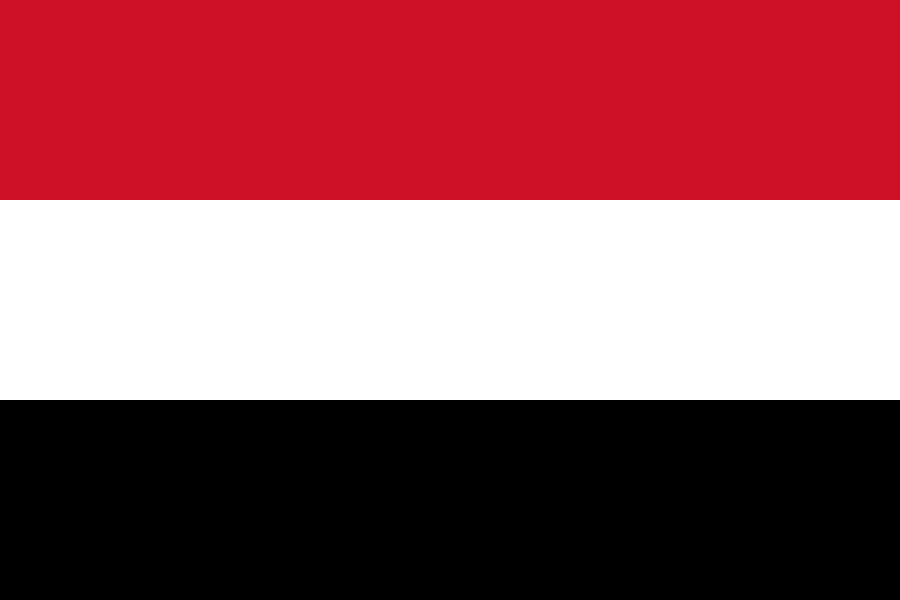
Yemen
Yemen
- Capital
- Sana'a
- Population
- 29,825,968
- Region
- Asia
- Languages
- Arabic
The island of Socotra, which belongs to Yemen, is often called the most alien-looking place on Earth due to its unique biodiversity. It is home to the iconic Dragon's Blood Tree, which produces a red sap used for centuries in medicine and varnishes. Over a third of the plant life on this island is found nowhere else on the planet, creating a prehistoric landscape that feels entirely disconnected from the modern world. This ecological isolation has led scientists to refer to it as the 'Galapagos of the Indian Ocean'.
Currency
The official currency is the Yemeni rial, identified by the ISO code YER. Historically, the rial was influenced by the Maria Theresa thaler, a silver bullion coin that was widely used across Yemeni trade routes for centuries before modern paper currency was established.
Flag symbolism
The flag consists of three horizontal stripes in red, white, and black, which are the traditional Pan-Arab colors. The red stripe represents the blood shed by martyrs during the struggle for independence and the unity of the nation. The white stripe symbolizes a bright future and the purity of the people's intentions, while the black stripe commemorates the country's dark past under colonial rule and imamate oppression. This design was adopted in 1990 following the unification of North and South Yemen.
Emblem history
The national emblem of Yemen depicts a golden eagle of Saladin, which serves as a symbol of strength and Arab unity. Clutched in the eagle's talons is a scroll bearing the name of the country in Arabic script. On the eagle's chest, a shield portrays a coffee plant and the historic Marib Dam, representing the country's agricultural heritage and ancient engineering feats. Flanking the eagle are two national flags, emphasizing the sovereignty and pride of the modern unified state.