Samoa
Samoa
- Capital
- Apia
- Population
- 198,410
- Region
- Oceania
- Languages
- Samoan, English
In 2011, Samoa skipped an entire day by jumping across the International Date Line to align its business hours with major trading partners Australia and New Zealand. Residents went to sleep on December 29 and woke up on December 31, meaning nobody in the country celebrated a birthday or anniversary on that particular Friday. This bold move effectively shifted the nation from being one of the last places to see the sunset to one of the first to see the sunrise.
Currency
The national currency of Samoa is the Tālā, which uses the ISO code WST. The name is a direct transliteration of the English word 'dollar,' and it was introduced in 1967 to replace the Western Samoan pound. One unique feature is that the currency notes frequently depict important cultural motifs and landscapes, highlighting the nation's shift from colonial monetary systems to fiscal sovereignty.
Flag symbolism
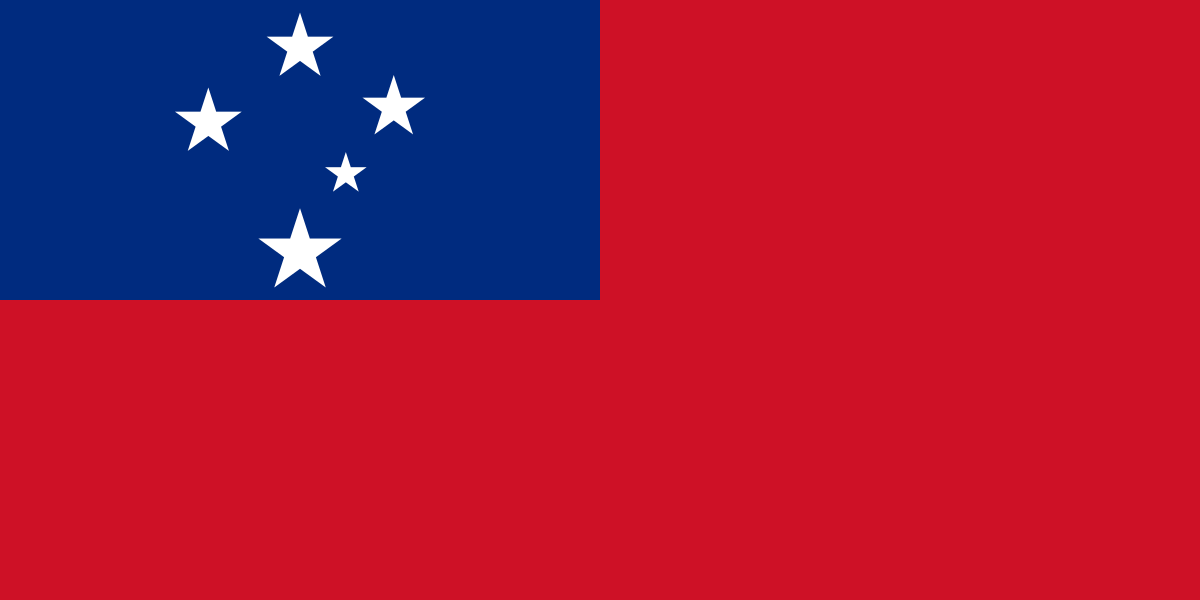
The flag features a bright red field with a blue canton containing five white stars of varying sizes. The red represents courage and the bloodshed of the nation's ancestors, while the blue symbolizes freedom and the vast Pacific Ocean. The stars form the Southern Cross constellation, which serves as a navigational guide and a symbol of Samoa's connection to the wider Southern Hemisphere.
Emblem history
Samoa's national emblem is based on a design adopted in 1951, which incorporates a silver shield topped by a Christian cross to signify the nation's deep religious faith. At the center of the shield is a coconut palm tree standing before tropical sea waves, representing the natural bounty of the islands. This central imagery is encircled by a grid pattern derived from the United Nations emblem, reflecting Samoa’s history as a trust territory before achieving independence.