Virgin Islands (U.S.)
Virgin Islands (U.S.)
- Capital
- Charlotte Amalie
- Population
- 106,290
- Region
- Americas
- Languages
- English
The United States purchased these islands from Denmark in 1917 for $25 million in gold to secure a strategic naval base during World War I. Because of this long-standing Danish influence, drivers in the territory still operate on the left side of the road, despite using American left-hand drive vehicles. This unique hybrid of cultural influences makes it the only place under United States jurisdiction where driving on the left is the legal standard.
Currency
The official currency is the United States Dollar, known by the ISO code USD. Before the transition to American currency following the 1917 purchase, the islands primarily used the Danish West Indian daler, which was pegged to the value of the gold standard.
Flag symbolism
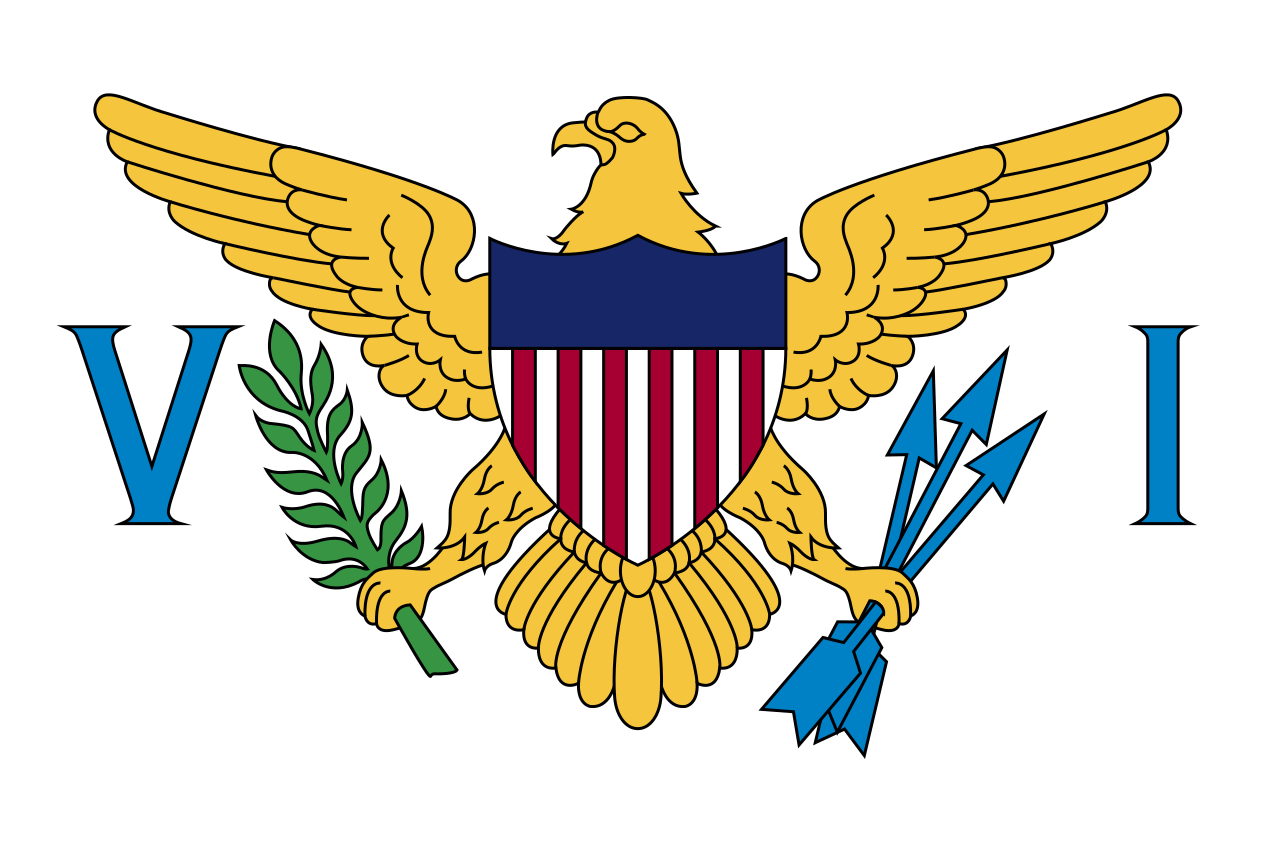
The flag features a simplified version of the United States Coat of Arms centered on a white field, positioned between the letters V and I for Virgin Islands. The eagle holds a laurel branch representing peace in one talon and three blue arrows in the other, which represent the major islands of Saint Thomas, Saint John, and Saint Croix. The golden eagle and the multi-colored crest utilize the American national colors to symbolize the territory's political status and protection under the United States.
Emblem history
The central emblem is derived from the Great Seal of the United States and was designed by Percival Sparks, a sailor in the U.S. Navy. The eagle’s shield consists of thirteen vertical stripes, representing the original thirteen colonies of the mainland. While the design was officially adopted by executive order in 1921, the specific iconography of the arrows was modified from the traditional American design specifically to honor the local geography of the archipelago.