Virgin Islands (British)
Virgin Islands (British)
- Capital
- Road Town
- Population
- 30,237
- Region
- Americas
- Languages
- English
Despite being a British Overseas Territory, the islands officially use the United States Dollar as their legal currency. This decision was made in 1959 due to the close economic ties and proximity to the neighboring United States Virgin Islands. It creates a unique situation where British administrative law operates alongside an American monetary framework. Visitors may be surprised to find that while they see the British monarch on the stamps, they spend greenbacks at the local markets.
Currency
The official currency is the United States Dollar (USD). Despite being a British territory, the islands adopted the U.S. currency in 1959 to facilitate easy trade and integration with the neighboring United States Virgin Islands.
Flag symbolism
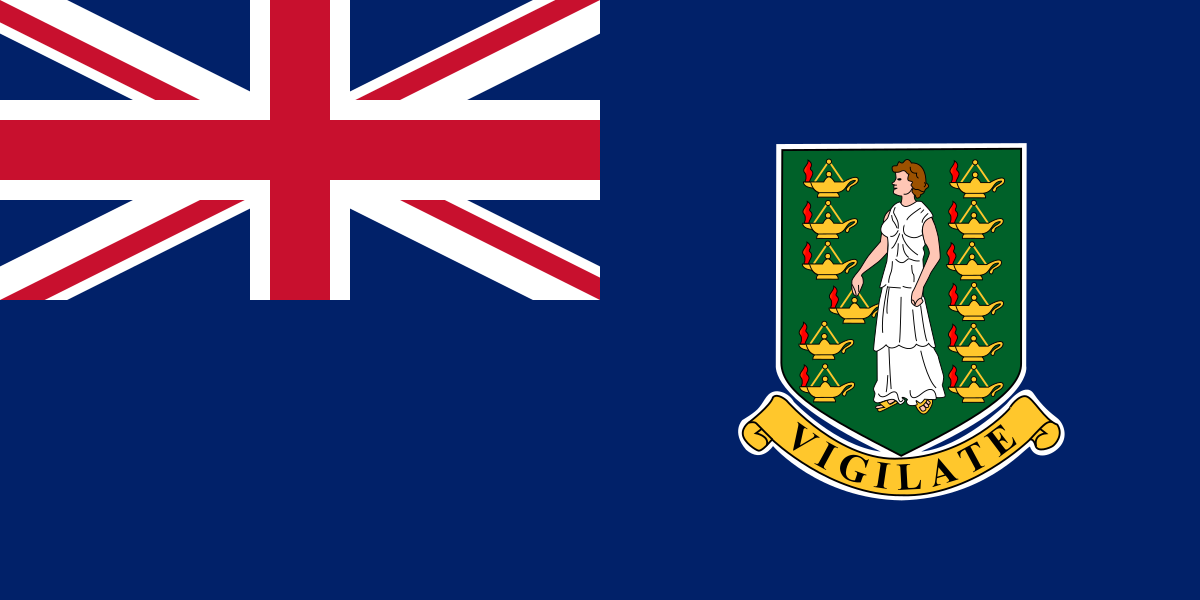
The flag is a Blue Ensign, featuring the Union Jack in the canton to signify the territory's constitutional ties to the United Kingdom. On the fly side, the state coat of arms is displayed, showcasing a woman in white robes holding a golden lamp. She is surrounded by eleven other burning lamps against a green field, representing Saint Ursula and her followers. The color blue reflects the maritime heritage and the vast oceanic reaches surrounding the islands.
Emblem history
The coat of arms dates back to 1960 and is deeply rooted in religious legend. The central figure represents Saint Ursula, a legendary Romano-British princess who traveled Europe with eleven thousand virgins. When Christopher Columbus sighted the islands in 1493, he was so impressed by their beauty that he named them after this legendary group. The eleven lamps on the shield serve as symbolic representations of those companions, cementing a five-hundred-year-old naming tradition into the islands' official heraldry.