Vatican City
Vatican City
- Capital
- Vatican City
- Population
- 451
- Region
- Europe
- Languages
- Latin, Italian, French, German
This sovereign state operates the world's only bank ATMs that feature instructions in Classical Latin. While Italian is the everyday language of administration, many official documents and specific liturgical instructions are still produced in Latin today. The territory also maintains its own unique postage system, which is famously reliable and often preferred by tourists over the standard Italian mail service. Its short railway network is officially the smallest national rail system on the planet, consisting of just two 300-meter tracks.
Currency
The official currency is the Euro (EUR), despite Vatican City not being a member of the European Union. Prior to 1999, the state used the Vatican Lira, which was held at a fixed exchange rate with the Italian Lira, allowing both currencies to be used interchangeably across the borders of Rome.
Flag symbolism
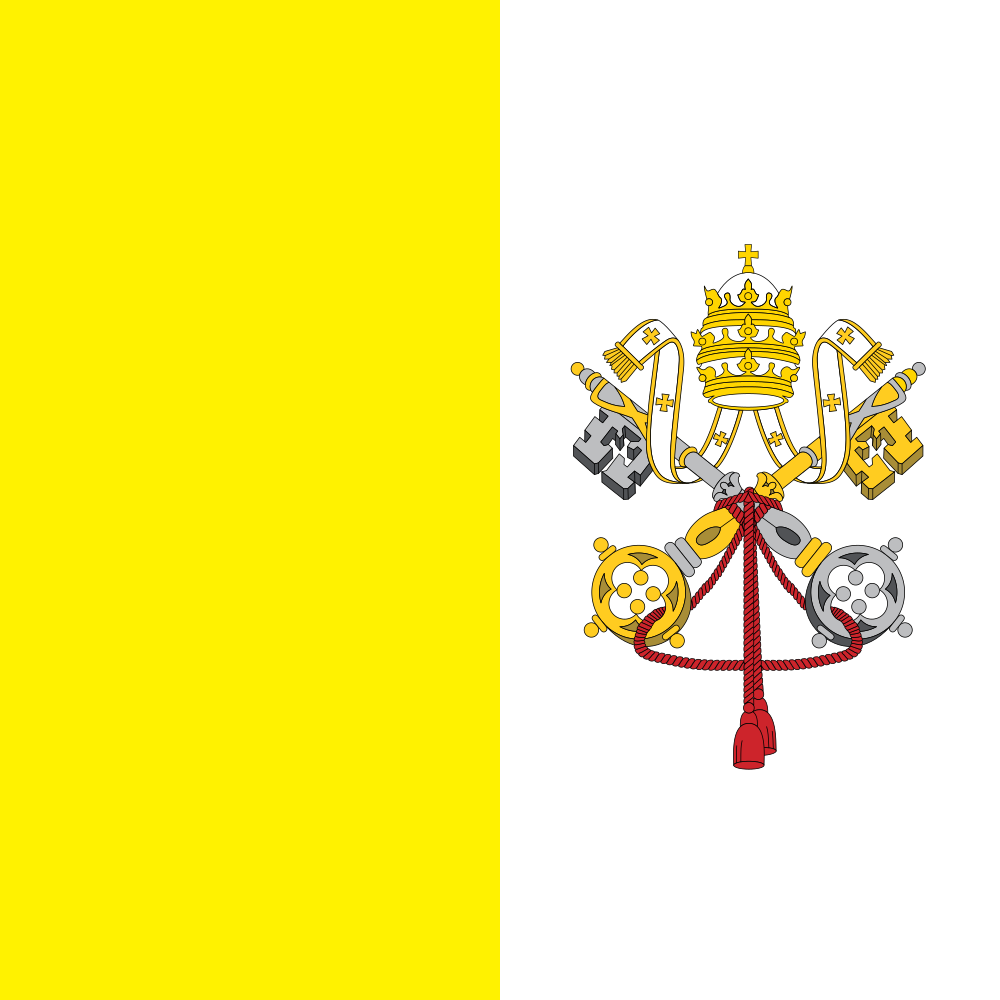
The flag is composed of two vertical bands of yellow and white, which represent the colors of gold and silver. These specific precious metals are meant to symbolize the spiritual and worldly powers held by the papacy. The white section prominently displays the crossed keys of Saint Peter, which signify the keys to the Kingdom of Heaven. A red cord ties the keys together, symbolizing the union between the spiritual authority and the physical administration of the church.
Emblem history
The national emblem features the Papal Tieria, a three-tiered crown representing the triple roles of the Pope as father of kings, governor of the world, and Vicar of Christ. Below the tiara are two crossed keys, one gold and one silver, which have been used by the Holy See since the 14th century. The gold key represents the power to bind and loose in heaven, while the silver key represents the same power on earth. This heraldic design is rooted in the biblical Gospel of Matthew, where Jesus promises the keys of the kingdom to the Apostle Peter.