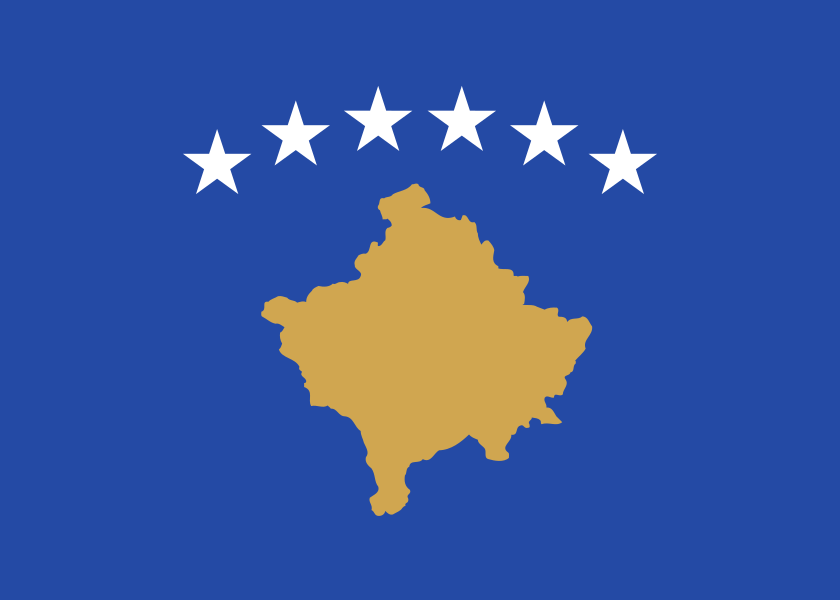
Republic of Kosovo
Republic of Kosovo
- Capital
- Pristina
- Population
- 1,775,378
- Region
- Europe
- Languages
- Albanian, Serbian
Kosovo is home to the world's youngest population in Europe, with over half the residents under the age of 25. This youthful energy is reflected in the vibrant coffee culture of the capital, Pristina, where thousands of macchiatos are served daily in a city known for having some of the best espresso on the continent. In a unique tribute to international diplomacy, the capital also features a major boulevard and a large bronze statue dedicated to former U.S. President Bill Clinton. The locals even celebrate New Year's Eve with a tradition of street lighting that rivals major world capitals in scale and enthusiasm.
Currency
The official currency used in Kosovo is the Euro (EUR), despite the country not being a formal member of the Eurozone. Before adopting the Euro in 2002, Kosovo used the German Mark as its de facto currency to ensure economic stability during a period of high inflation in the region. This unilateral adoption was a strategic move to integrate more closely with the European economy and foster financial security.
Flag symbolism
The flag features a map of the territory in gold centered on a dark blue field, making it one of only two national flags to use a map as a primary design element. Above the golden silhouette, six white stars form an arc to represent the six major ethnic groups living within the borders: Albanians, Serbs, Bosniaks, Roma, Turks, and Ashkali/Egyptians. The blue and yellow color palette was chosen to reflect the colors of the European Union, signaling the nation's aspirations for continental integration. The design was specifically created to be ethnically neutral and represent a peaceful, multi-ethnic future for all citizens.
Emblem history
The national emblem of Kosovo closely mirrors the design of its flag, featuring a blue shield with a golden map and six white stars. It was officially adopted by the Assembly of Kosovo upon the declaration of independence in 2008 following a design competition that required entries to avoid specific partisan or ethnic imagery. The three-colored scheme of blue, gold, and white replaces older, unofficial symbols that often featured the double-headed eagle. This modern emblem is intended to provide a unified identity for the state that transcends its historical conflicts. It is used on all official government documents and serves as the primary visual representation of the republic's sovereignty.