United States Minor Outlying Islands
United States Minor Outlying Islands
- Capital
- —
- Population
- 300
- Region
- Americas
- Languages
- English
Most of these scattered islands and atolls were originally claimed by the United States under the Guano Islands Act of 1856. This legislation allowed American citizens to take possession of unclaimed islands containing guano deposits for use as agricultural fertilizer. Although many have since served as military outposts or weather stations, today they are predominantly managed as protected National Wildlife Refuges. Wake Island remains unique among the group as the only territory with a developed airfield and a small seasonal population of military personnel and contractors.
Currency
The official currency is the United States Dollar, denoted by the ISO code USD. Interestingly, during the mid-19th century, many of these islands were valued not for gold but for 'guano,' which was so precious as a fertilizer that the U.S. government passed special legislation to claim the islands. Today, the dollar remains the sole medium of exchange for the scientific and military personnel stationed there.
Flag symbolism
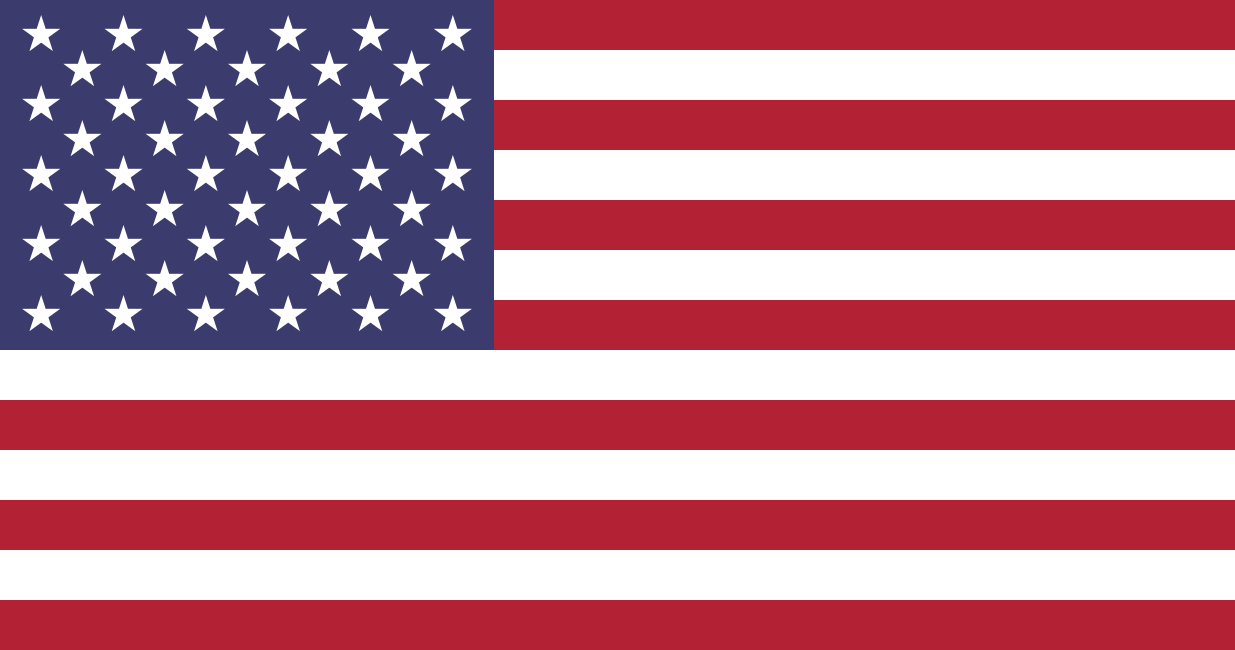
As an unincorporated territory of the United States, these islands do not possess a unique official flag and primarily fly the Stars and Stripes. The fifty stars represent the unity of the American states, while the thirteen stripes commemorate the original colonies that founded the nation. Occasionally, specific islands like Wake Island or Johnston Atoll use unofficial local designs incorporating indigenous symbols or silhouettes of the islands themselves. However, for all official diplomatic and legal purposes, the national flag of the United States is the only recognized banner.
Emblem history
The United States Minor Outlying Islands do not have a collective coat of arms, so the Great Seal of the United States is used for official administrative business. This seal features a bald eagle clutching an olive branch and thirteen arrows to symbolize the powers of peace and war. The shield on the eagle's breast signifies that the nation's strength comes from its own unity and reliance on liberty. Many of the individual islands also feature distinct departmental seals from the U.S. Fish and Wildlife Service, which highlight a leaping salmon and a flying goose to represent conservation efforts.