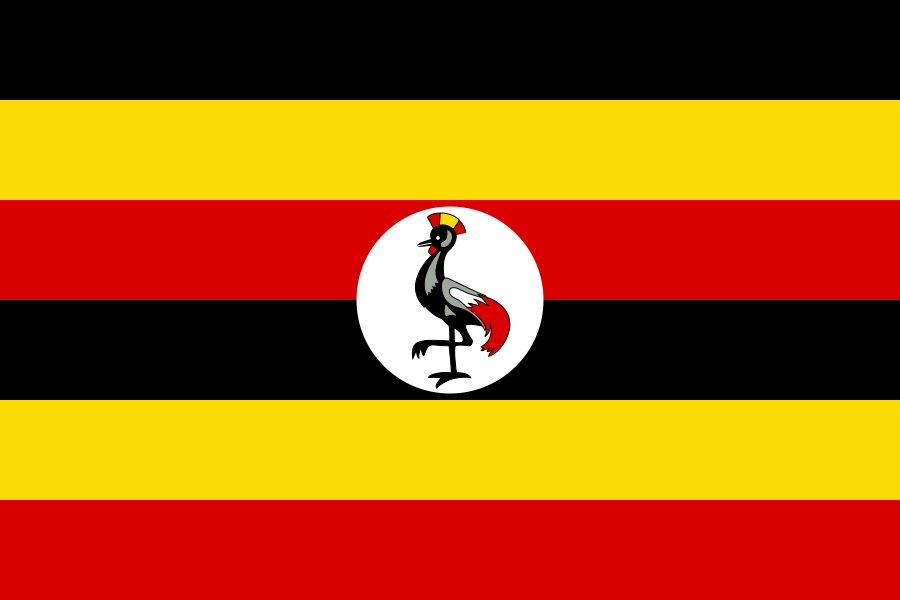
Uganda
Uganda
- Capital
- Kampala
- Population
- 45,741,000
- Region
- Africa
- Languages
- English, Swahili
Uganda is often referred to as the 'Pearl of Africa,' a title popularized by Winston Churchill who was amazed by its ecological diversity. The country is home to over half of the world's remaining mountain gorilla population, which live in the thick, ancient forests of Bwindi. It is also a global hub for avian enthusiasts, boasting more than 1,000 recorded bird species, which accounts for roughly half of all bird species found across the entire African continent. Interestingly, the equator passes directly through the country, providing unique spots where visitors can stand with one foot in the Northern Hemisphere and the other in the Southern Hemisphere.
Currency
The official currency is the Ugandan Shilling, identified by the ISO code UGX. While the modern shilling was introduced in 1966 to replace the East African Shilling, it has undergone several revaluations due to high inflation periods in the country's turbulent 20th-century history.
Flag symbolism
The national flag consists of six equal horizontal bands of black, yellow, and red, which are the colors of the Uganda People's Congress party. The black stripes represent the native people of Africa, while the yellow signifies the abundant tropical sunshine that bathes the land. The red bands symbolize brotherhood and the shared blood that connects all Africans. Centered in a white disc is the Grey Crowned Crane, a bird chosen for its gentle nature and because it was the military badge of Ugandan soldiers during the colonial era.
Emblem history
The coat of arms features a central shield and spears representing the traditional readiness of the Ugandan people to defend their country. On the left, it is supported by the Ugandan Kob, symbolizing the nation's diverse wildlife, and on the right by the Grey Crowned Crane, the national bird. The shield sits atop a green mound representing fertile land, positioned above a depiction of the River Nile. Coffee and cotton sprigs flank the river, highlighting the historic importance of these two crops to the national economy since the early 20th century.