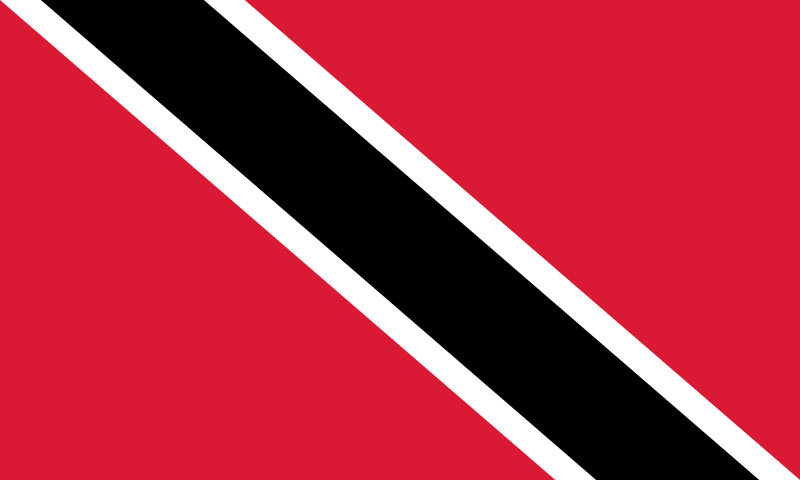
Trinidad and Tobago
Trinidad and Tobago
- Capital
- Port of Spain
- Population
- 1,399,491
- Region
- Americas
- Languages
- English
Trinidad and Tobago is the undisputed birthplace of the steelpan, which remains the only acoustic musical instrument invented in the 20th century. During the 1930s, local innovators transformed discarded oil barrels from the island's energy industry into finely tuned melodic percussion. The nation also stakes a claim to the world's hottest pepper history, having developed the record-breaking Moruga Scorpion. Furthermore, the island of Trinidad contains the world's largest natural deposit of asphalt, known as Pitch Lake, which has provided paving material for roads around the globe for centuries.
Currency
The official currency is the Trinidad and Tobago dollar, identified by the ISO code TTD. Before its introduction in 1964, the islands used the British West Indies dollar, and historical currency once included 'cut money' where silver coins were literally sliced into pieces to provide smaller denominations.
Flag symbolism
The national flag features a red field divided diagonally by a black stripe bordered by two thin white stripes. The red represents the vitality of the land and its people, as well as the warmth of the sun. The black signifies the strength and unity of the nation, while also paying homage to the wealth of the earth. The white stripes symbolize the sea that surrounds the islands and represents the purity of national aspirations and equality under the sun.
Emblem history
The national coat of arms prominently features two large birds, the Scarlet Ibis and the Cocrico, which serve as the national birds for Trinidad and Tobago respectively. Resting on the central shield are three ships that represent Christopher Columbus’s vessels, symbolizing the islands' intersection with European exploration. Two hummingbirds occupy the top of the shield, acknowledging the more than fifteen species that gave Trinidad its indigenous name, 'The Land of the Hummingbird.' At the base of the emblem is the national motto, 'Together We Aspire, Together We Achieve,' which was adopted upon independence from British rule in 1962.