Tajikistan
Tajikistan
- Capital
- Dushanbe
- Population
- 9,537,642
- Region
- Asia
- Languages
- Tajik, Russian
Tajikistan is home to the Fedchenko Glacier, which is the longest glacier in the world outside of the polar regions. Stretching for over 70 kilometers, it is a vital source of water for the entire region's river systems. The country also features the world's second-highest man-made dam, the Nurek, which generates the vast majority of the nation's electricity. Interestingly, over 90 percent of the country is covered by mountains, making it a premier destination for high-altitude trekking and mountaineering.
Currency
The national currency is the Somoni, which carries the ISO code TJS. It was introduced in 2000 to replace the Tajikistani ruble and was named in honor of Ismail Samani, the founder of the first centralized Tajik state.
Flag symbolism
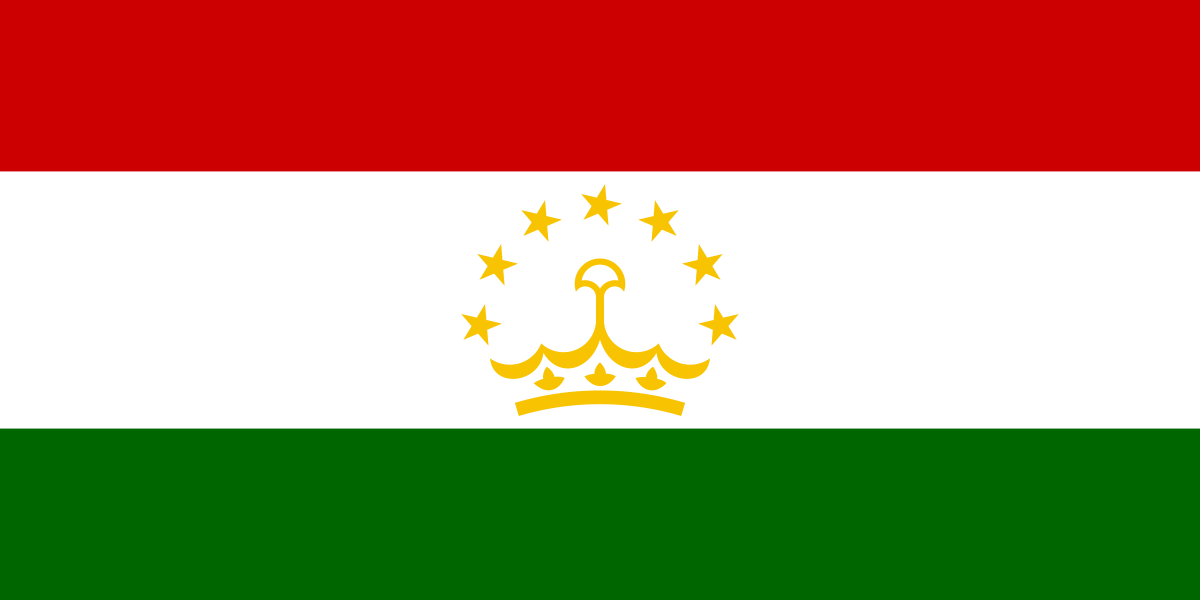
The flag consists of horizontal stripes of red, white, and green, with a gold crown and seven stars at the center. The red stripe represents the unity of the nation and the sacrifice of past generations, while the white symbolizes the country's cotton industry and the purity of the mountains. The green band stands for agricultural bounty and the spirit of Islam. The central crown represents the Tajik people—whose name is historically linked to the word for 'crown'—and the seven stars signify the importance of the number seven in traditional Persian-Tajik mythology.
Emblem history
The national emblem of Tajikistan features a gold crown and seven stars, mirroring the design found on the national flag. It is framed by a wreath of wheat on one side and cotton on the other, both wrapped in a tricolor ribbon. Rising behind the crown is a stylized sun over the Pamir Mountains, symbolizing the birth of a new era for the republic. This design was adopted in 1993 and retains some structural elements of the former Soviet-era emblem, though it replaced socialist symbols like the hammer and sickle with traditional cultural motifs.