Turks and Caicos Islands
Turks and Caicos Islands
- Capital
- Cockburn Town
- Population
- 38,718
- Region
- Americas
- Languages
- English
The islands serve as a primary migratory path for thousands of Atlantic humpback whales traveling toward hispaniola every winter. Local folklore is also deeply tied to 'ripsaw music,' a unique genre where the primary instrument is a common carpenter's handsaw bent and scraped with a metal object. Additionally, the territory is home to the world’s only commercial queen conch farm, reflecting the deep cultural and economic importance of this specific mollusk.
Currency
The official currency is the United States Dollar, which carries the ISO code USD. Despite being a British territory, the islands adopted the U.S. currency in 1971 to facilitate easier trade and tourism due to their close commercial ties with North America.
Flag symbolism
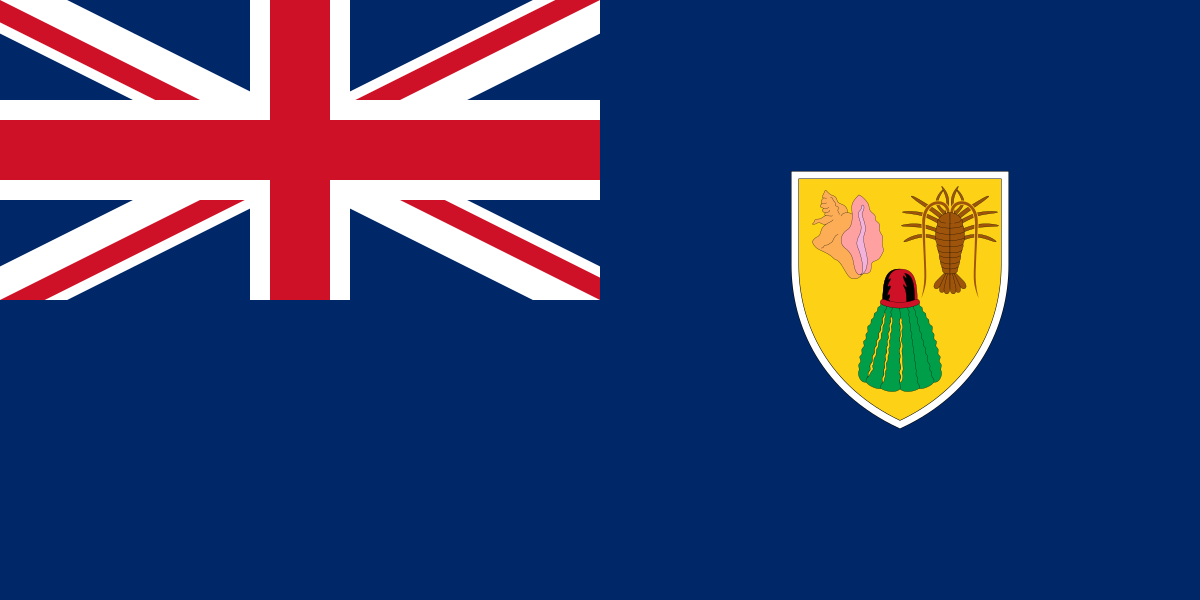
The flag follows the British Blue Ensign pattern, featuring the coat of arms centered in the fly half on a dark blue field. The shield displays a queen conch shell and a spiny lobster, both of which represent the primary seafood industries of the islands. A Turk's-cap cactus is also featured, named for its distinctive red top that resembles a traditional Turkish fez hat.
Emblem history
The current coat of arms was officially granted in 1965 to replace a colonial seal that had been used since the 19th century. Interestingly, the historical seal contained a mistake where a salt-maker was depicted next to two piles of salt that the London artist mistakenly rendered as igloos. The modern shield corrected these elements to focus on indigenous flora and fauna, supported by two flamingos and topped with a pelican set between two sisal plants.