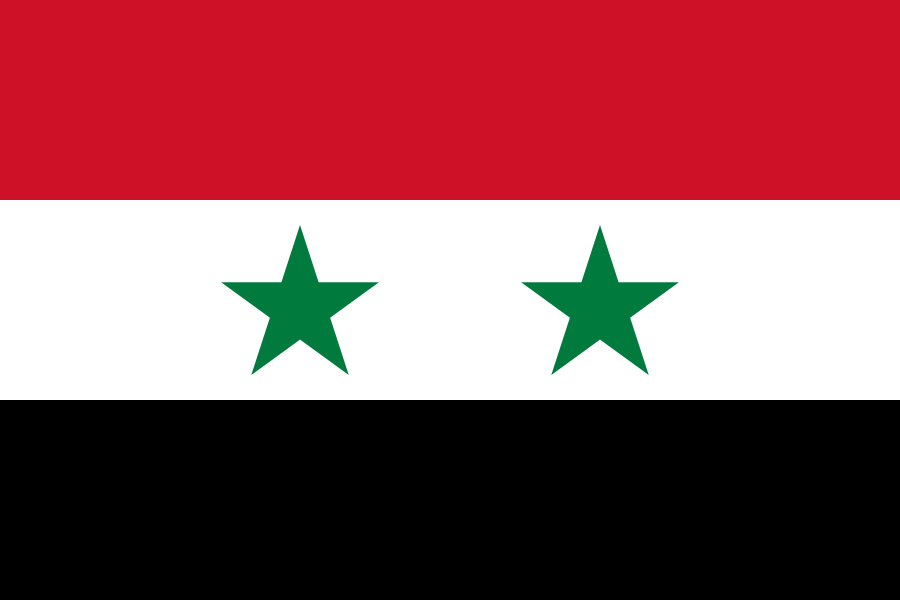
Syrian Arab Republic
Syrian Arab Republic
- Capital
- Damascus
- Population
- 17,500,657
- Region
- Asia
- Languages
- Arabic
The ancient city of Damascus is widely considered to be one of the oldest continuously inhabited cities in the world, with evidence of urban settlement dating back several millennia. It is also home to the Umayyad Mosque, which contains a shrine believed to hold the head of John the Baptist, a figure revered by both Christians and Muslims. This rich historical tapestry is further reflected in the city of Aleppo, which stood as a vital terminus for the Silk Road trade route for centuries. The country's landscape is dotted with remarkable archaeological sites, including the remarkably preserved Roman theater in the city of Bosra, built from distinct black basalt mountain stone.
Currency
The official currency is the Syrian Pound, denoted by the ISO code SYP. While the currency has modern features today, it was historically linked to the French Franc for several decades following the end of the Ottoman Empire's rule.
Flag symbolism
The national flag features three horizontal stripes in red, white, and black, which represent the Pan-Arab colors used by various regional nations. The red stripe symbolizes the blood shed during the struggle for independence, while the white stripe signifies peace and a bright future. The black stripe represents the dark era of colonial rule and past oppression that the nation overcame. Two green stars are positioned in the center white band, originally representing the historical union between Syria and Egypt in the United Arab Republic.
Emblem history
The coat of arms features the Hawk of Quraish, a symbol that traces its origins back to the tribe of the Prophet Muhammad. The hawk is depicted in gold and holds a shield on its breast that mirrors the vertical colors of the national flag. Below the hawk, a scroll displays the official name of the republic written in Kufic script. This emblem has undergone several changes throughout the 20th century to reflect shifting political alliances, but the hawk remains the enduring central icon of Syrian statehood.