Eswatini
Eswatini
- Capital
- Mbabane
- Population
- 1,160,164
- Region
- Africa
- Languages
- English, Swati
Eswatini is home to the oldest known mining operation in the world at Ngwenya Mine, where iron ore was extracted as far back as 43,000 years ago. While modern industrial mining occurred there in the 20th century, ancient ancestors used the site to obtain red ochre for ritual and cosmetic purposes. The country also remains one of the last absolute monarchies on the planet, where the king rules alongside the Queen Mother, known as the Indlovukazi or 'Great She-Elephant.'
Currency
The national currency is the Lilangeni, denoted by the ISO code SZL. Introduced in 1974 to celebrate the Silver Jubilee of King Sobhuza II, it is pegged at a one-to-one exchange rate with the South African Rand, which is also accepted as legal tender within the nation.
Flag symbolism
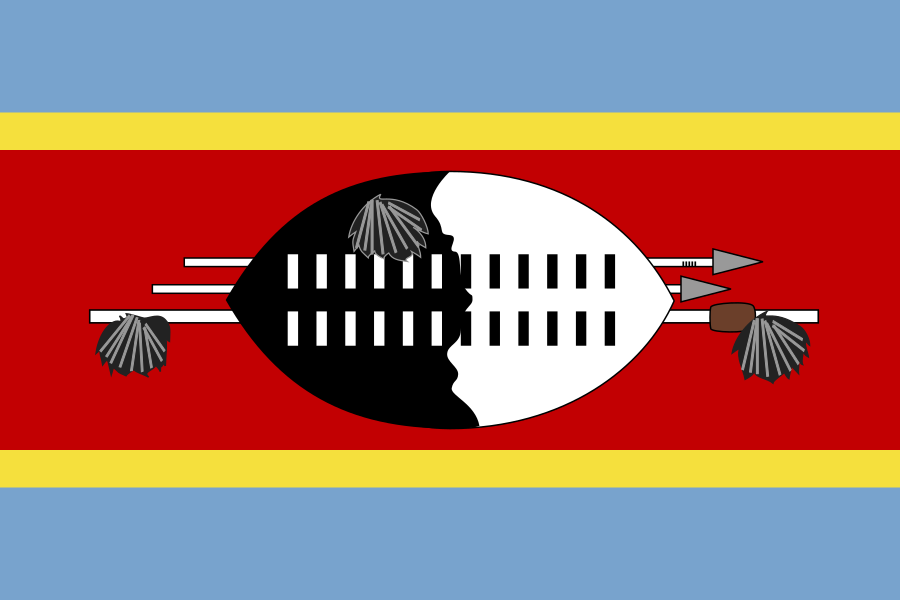
The flag features a central black and white shield representing the peaceful coexistence of different races. Behind the shield lie two spears and a staff adorned with bird feathers, which symbolize the protection of the kingdom against its enemies. The crimson band stands for the battles fought in the past, while the blue represents peace and stability, and the yellow depicts the natural resources of the land.
Emblem history
The national coat of arms features a lion and an elephant acting as supporters for a traditional Emasotsha shield. The lion represents the King, known as the Ngwenyama, while the elephant represents the Queen Mother, signifying the dual nature of the country's leadership. Resting above the shield is a lidlabe, a crown of feathers worn by the king during the sacred Incwala ceremony to represent authority and national unity.