Sao Tome and Principe
Sao Tome and Principe
- Capital
- São Tomé
- Population
- 219,161
- Region
- Africa
- Languages
- Portuguese
This island nation is often referred to as the Chocolate Islands because it was once the world's largest producer of cocoa at the beginning of the 20th century. While industrial production has decreased, the country still cultivates rare and high-quality Criollo and Forastero beans that are highly sought after by boutique chocolatiers globally. Visitors can still tour historic 'roças', which are colonial-era plantation estates that once functioned as self-contained miniature cities. The country also sits near the intersection of the Equator and the Prime Meridian, making it one of the closest landmasses to 'Null Island'.
Currency
The national currency is the dobra, identified by the ISO code STN. In 2018, the country introduced a 'New Dobra' by re-denominating the currency at a rate of 1,000 to 1 to simplify transactions, and it is currently pegged to the Euro to ensure economic stability.
Flag symbolism
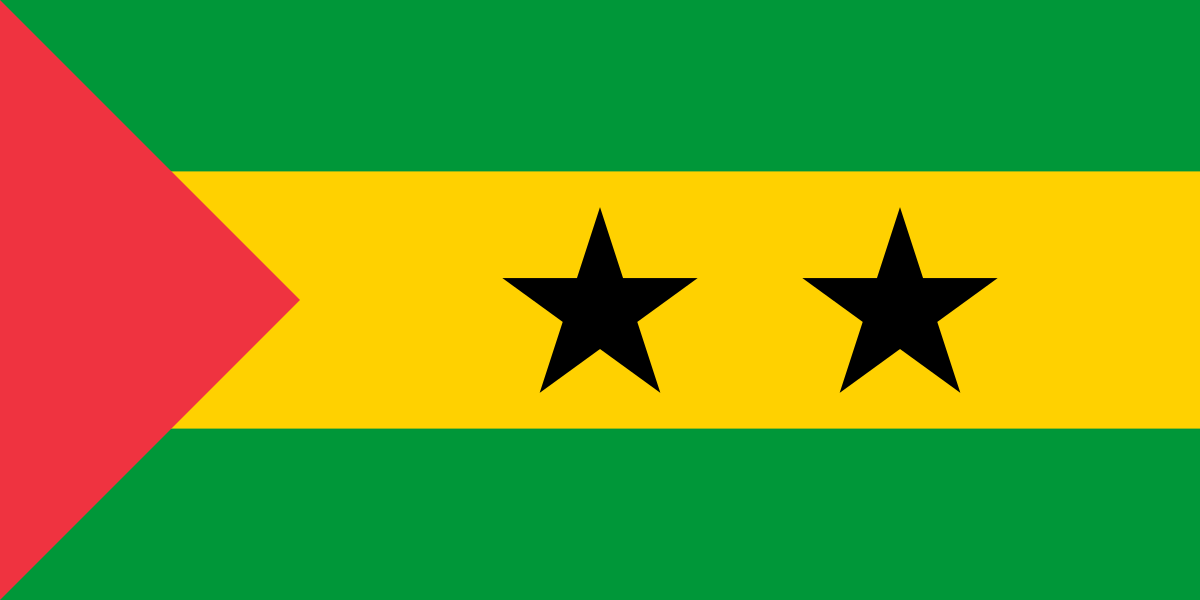
The flag features three horizontal stripes of green, yellow, and green, representing the lush vegetation, the tropical sun, and the cocoa industry respectively. At the hoist sits a red triangle that symbolizes the hard-fought struggle for national independence. Two black five-pointed stars are prominently placed on the central yellow band to represent the two main islands that comprise the nation. This design was adopted in 1975 and is heavily influenced by the colors of the Pan-African movement and the liberation party's original banner.
Emblem history
The national coat of arms features a central shield depicting a cocoa tree, which highlights the historical economic foundation of the islands. Above the shield sits a blue star that represents the nation's unity and its position just above the equator. The shield is supported by a falcon on the left and a parrot on the right, both representing the unique biodiversity found within the local rainforests. A banner at the bottom displays the national motto, 'Unity, Discipline, Work,' reflecting the post-colonial values established upon gaining sovereignty from Portugal.