Somalia
Somalia
- Capital
- Mogadishu
- Population
- 15,893,219
- Region
- Africa
- Languages
- Somali, Arabic
Somalia is home to the ancient Laas Geel cave paintings, which are some of the most vibrant and well-preserved examples of rock art in all of Africa. These Neolithic illustrations depict a time when the region was a lush landscape filled with long-horned cattle and ceremonial human figures. Despite being thousands of years old, the colors remain incredibly vivid because the rock overhangs have shielded them from the elements and sun for millennia.
Currency
The official currency is the Somali shilling, identified by the ISO code SOS. An interesting historical aspect of the currency is that for many years following the civil unrest in the 1990s, the central bank ceased operations, leading to a unique economy where private entities printed their own versions of the banknotes. During this period, the older '721' and '621' note series became rare commodities, and the currency market functioned through a decentralized system of social trust and merchant verification.
Flag symbolism
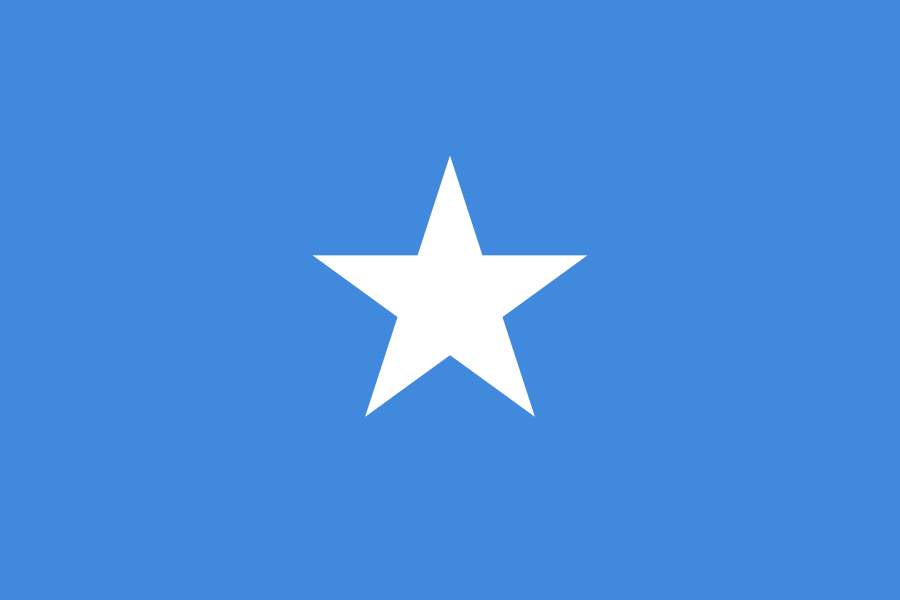
The flag features a light blue field which was originally inspired by the United Nations flag as a gesture of gratitude for the organization's role in the country's transition to independence. Centered on this blue background is a single white five-pointed star known as the Star of Unity. Each point of the star represents one of the five historical regions where Somali people lived, symbolizing the aspiration for national reunification. This minimalist design was first adopted in 1954 during the trusteeship period before full sovereignty.
Emblem history
The national emblem features a blue shield adorned with a white five-pointed star, mirroring the design of the national flag. This shield is supported by two upright leopards standing on crossed spears, which are draped with a ribbon and two palm fronds. The leopards serve as a traditional symbol of strength and protection, while the spears and palm branches represent the balance between defense and peace. This specific heraldic arrangement was officially adopted in 1956 to represent the burgeoning administrative identity of the Somali people.