Solomon Islands
Solomon Islands
- Capital
- Honiara
- Population
- 686,878
- Region
- Oceania
- Languages
- English
This archipelago was the site of the pivotal World War II Battle of Guadalcanal, and today it remains one of the premier locations for wreck diving due to the high density of sunken warships and aircraft in its waters. Interestingly, the nation is one of the few places in the world where a unique genetic trait causes some indigenous residents to have naturally blond hair with dark skin. The islands also use a unique traditional currency known as shell money in certain provinces, which is still accepted for ceremonial bride prices and land disputes alongside the modern dollar.
Currency
The national currency is the Solomon Islands Dollar, denoted by the ISO code SBD. Before the introduction of modern bills, the islands traditionally used 'shell money' made from polished shells, which still carries significant cultural and ceremonial value today.
Flag symbolism
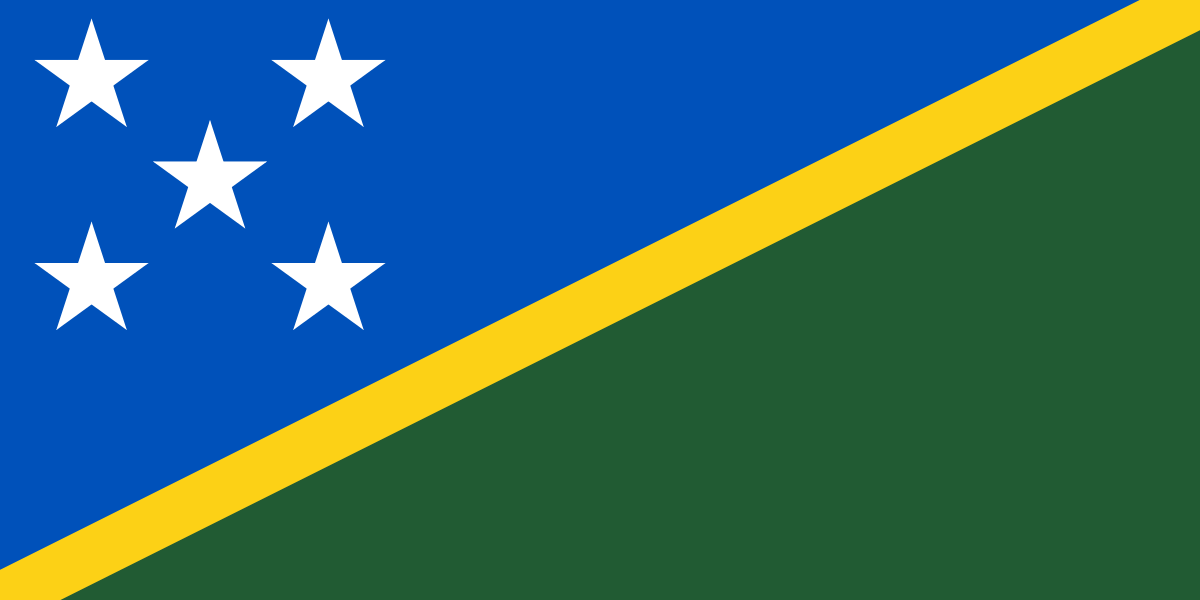
The flag features five white stars representing the main island groups of the archipelago, including the Eastern, Western, Central, Malaita, and Guadalcanal regions. A thin yellow diagonal stripe symbolizes the bright sunshine that warms the islands, while also serving as a divider between two distinct triangles of color. The upper blue triangle represents the surrounding Pacific Ocean and vital water resources, while the lower green triangle signifies the lush vegetation and agricultural richness of the land.
Emblem history
The national coat of arms features a shield supported by a shark and a crocodile, which represent the local marine and coastal fauna that hold spiritual significance in traditional folklore. Within the shield, various symbols pay homage to the different districts, such as an eagle for Malaita and a frigate bird for the Western District. A sun motif at the top of the design represents the dawn of independence, while the Latin motto beneath the shield translates to 'To Lead is to Serve,' reflecting the nation's post-colonial governance philosophy.