Senegal
Senegal
- Capital
- Dakar
- Population
- 16,743,930
- Region
- Africa
- Languages
- French
Senegal is home to Lake Retba, a unique body of water famous for its vivid pink hue caused by the Dunaliella salina algae. This lake has a salt content comparable to the Dead Sea, allowing people to float effortlessly while salt collectors work in the water for hours. It served for decades as the dramatic finish line for the world-renowned Dakar Rally. Visitors can witness the color intensity shift from a light mauve to a deep magenta depending on the sunlight and wind conditions.
Currency
The national currency is the West African CFA franc, identified by the ISO code XOF. Originally established in 1945 by the French government to stabilize the economies of its colonial territories, it is currently shared by eight independent states within the West African Monetary Union.
Flag symbolism
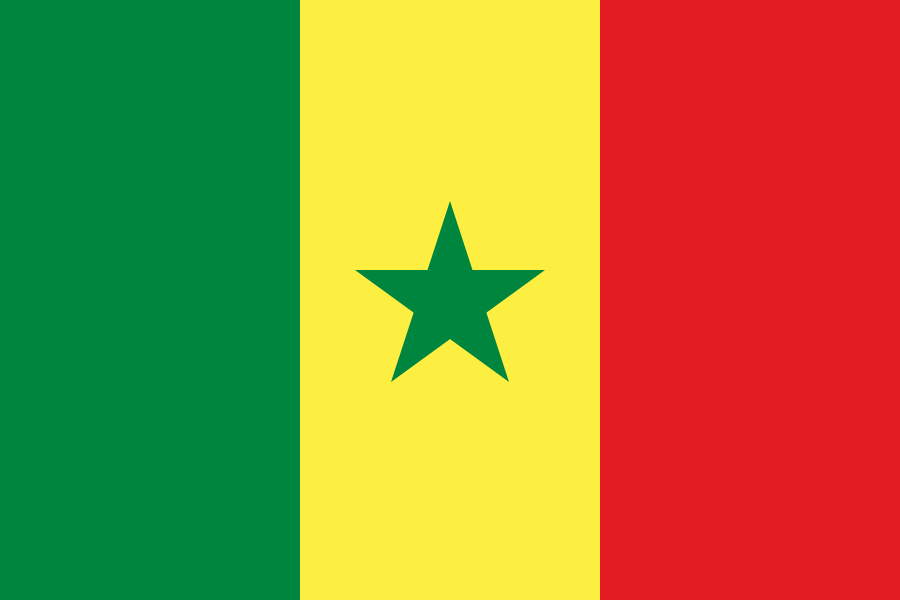
The flag features three vertical stripes of green, yellow, and red, which are the traditional Pan-African colors representing solidarity among African nations. The green stripe symbolizes Islam, progress, and hope, while the yellow signifies natural wealth and the fruits of labor. The red stripe represents the struggle for independence and the blood shed by martyrs. In the center sits a five-pointed green star, which serves as a symbol of African freedom, unity, and the spiritual aspirations of the people.
Emblem history
The national coat of arms features a shield split into two halves, with a lion on the left and a baobab tree on the right. The lion represents the strength and courage of the northern Sudanese ethnic groups and was a symbol of the state before colonial rule. The baobab tree is a revered national symbol that represents the endurance of the land and its people. Surrounding the shield are two palm branches, and below it hangs the National Order of the Lion, reflecting the country's honors system established after gaining independence from France in 1960.