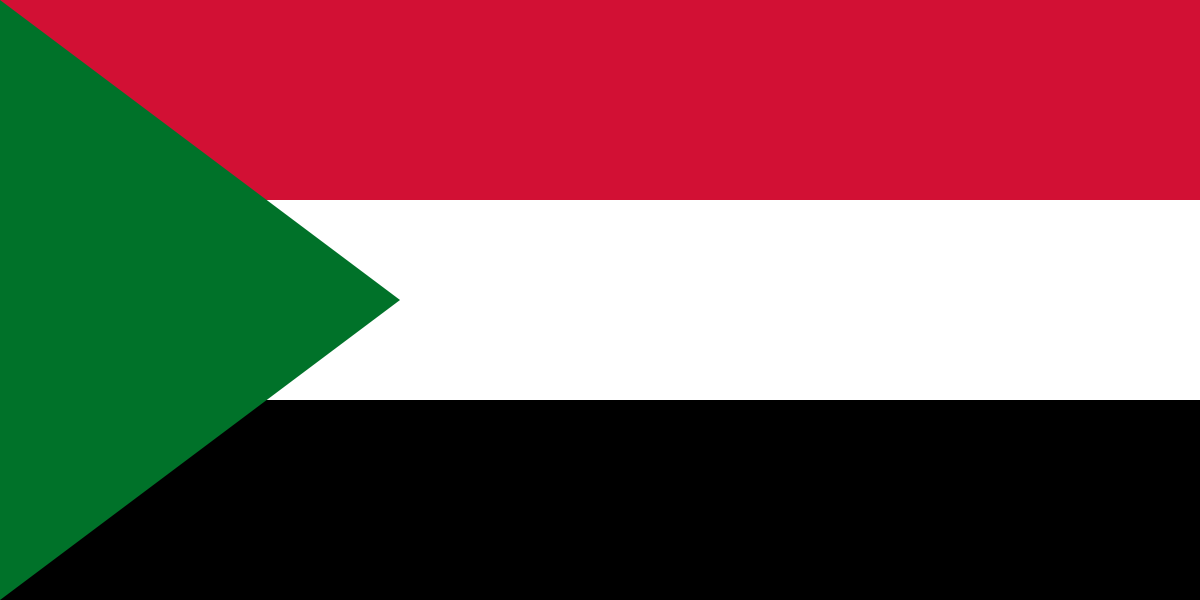
Sudan
Sudan
- Capital
- Khartoum
- Population
- 43,849,269
- Region
- Africa
- Languages
- Arabic, English
Sudan is home to more pyramids than Egypt, with over 200 ancient structures located in the Nile Valley. These steep-sided monuments were built by the rulers of the Kingdom of Kush, an ancient civilization that once conquered and ruled over its northern neighbor. The archaeological site of Meroë serves as a massive open-air museum where these royal tombs still stand among the desert dunes. This rich Nubian heritage remains one of the world's most significant yet under-visited archaeological treasures.
Currency
The official currency is the Sudanese Pound, identified by the ISO code SDG. Following the secession of South Sudan in 2011, the currency had to be completely overhauled and replaced to stabilize the economy of the newly defined sovereign state.
Flag symbolism
The flag features a horizontal tricolor of red, white, and black with a green triangle located at the hoist. The red stripe represents the struggle for independence and the sacrifices of the nation's martyrs, while white symbolizes peace, light, and optimism. The black stripe pays homage to the country's name, derived from the Arabic word for 'black,' and connects to the historical banners of the Mahdist uprising. Green is the traditional color of Islam and also signifies the fertility of the land and agriculture.
Emblem history
The national emblem of Sudan features a secretary bird holding a shield from the time of the Mahdiyya state. The secretary bird was chosen as a unique African alternative to the more common hawks and eagles used in the region's heraldry. Above the bird is a scroll displaying the national motto, 'Victory is Ours,' while a second scroll at the bottom identifies the Republic of the Sudan. This design was adopted in 1970, replacing an earlier emblem that prominently featured a rhinoceros.