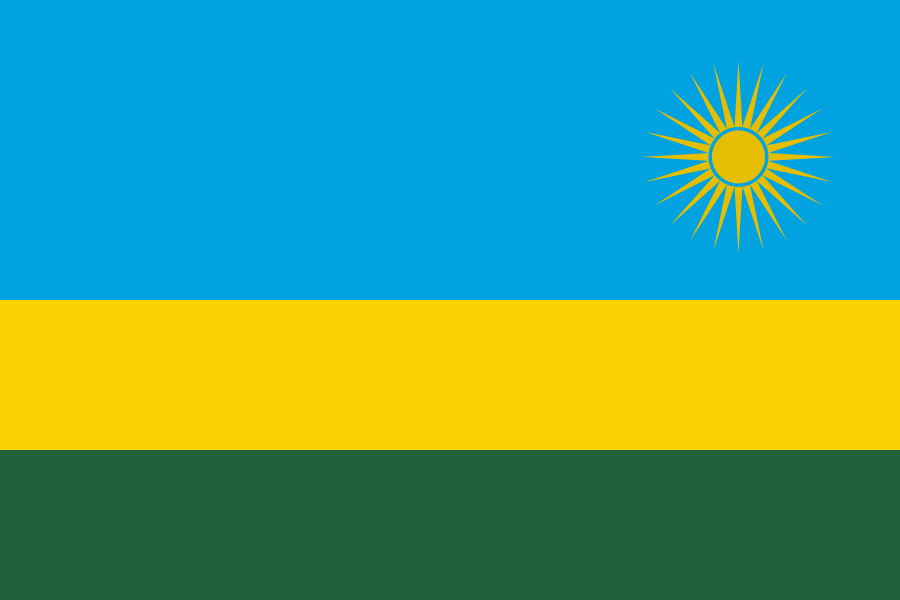
Rwanda
Rwanda
- Capital
- Kigali
- Population
- 12,952,209
- Region
- Africa
- Languages
- Kinyarwanda, English, French
Rwanda is a global leader in environmental sustainability and was one of the first countries in the world to implement a nationwide ban on plastic bags. This commitment to cleanliness is reinforced by Umuganda, a mandatory community service day held on the last Saturday of every month where citizens participate in public works projects. These initiatives have helped the capital, Kigali, earn a reputation as one of the cleanest cities on the African continent. Additionally, the country is home to the innovative Zipline drone delivery service, which uses autonomous aircraft to deliver life-saving medical supplies to remote hospitals.
Currency
The official currency is the Rwandan Franc, indicated by the ISO code RWF. It was introduced in 1960 to replace the Belgian Congo Franc following the country's move toward independence. Interestingly, the currency has seen various redesigns that feature local icons such as mountain gorillas and traditional dancers to reflect the nation's unique biodiversity and culture.
Flag symbolism
The Rwandan flag features three horizontal bands of blue, yellow, and green, with a vibrant golden sun positioned in the upper fly corner. The large blue band at the top represents happiness and peace, while the central yellow band symbolizes the nation's potential for economic development. The bottom green band signifies the hope for prosperity and the sustainable use of the country's natural resources. The sun and its twenty-four rays represent enlightenment, transparency, and the unity of the people against ignorance.
Emblem history
The current national emblem was adopted in 2001 to replace colonial-era symbols and reflect a new era of reconciliation and unity. It features a central traditional woven basket, known as an agaseke, which is a symbol of peace, sharing, and the preservation of culture. This basket is flanked by a stalk of sorghum and a coffee branch, representing the nation's primary agricultural foundations. The entire design is encircled by a protective cogwheel and a knotted cord, signifying the industrial progress and the unbreakable bond of the Rwandan people.