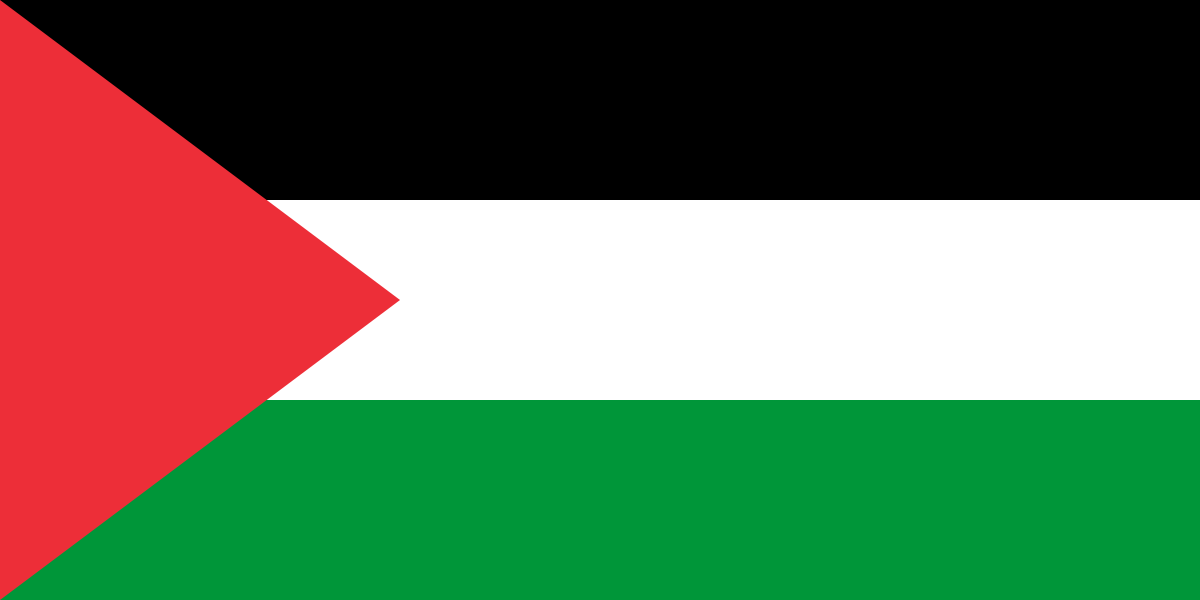
Palestine, State of
Palestine, State of
- Capital
- Ramallah
- Population
- 4,803,269
- Region
- Asia
- Languages
- Arabic
Palestine is home to the city of Jericho, which is widely considered one of the oldest continuously inhabited settlements in the world. Archaeologists have uncovered evidence of settlement dating back over 11,000 years, including the famous Tower of Jericho built in the Pre-Pottery Neolithic period. This ancient urban center predates the Pyramids of Giza by thousands of years, offering a unique window into the earliest transitions of human civilization. The region also hosts some of the world's most significant religious sites, drawing millions of pilgrims to locations like the Church of the Nativity in Bethlehem.
Currency
The State of Palestine currently uses multiple currencies including the Israeli New Shekel (ILS), Jordanian Dinar (JOD), and US Dollar. Historically, the Palestine Pound (fixed to the British Pound Sterling) was the official currency between 1927 and 1950. These vintage banknotes were unique for featuring trilingual text in Arabic, English, and Hebrew, reflecting the administrative complexity of the era.
Flag symbolism
The flag of Palestine features three horizontal stripes of black, white, and green, with a red triangle based on the hoist side. These colors represent the Pan-Arab heritage, with the black stripe symbolizing the Abbasid Caliphate and the white representing the Umayyad Caliphate. The green stripe honors the Fatimid Caliphate, while the red triangle signifies the Khawarij and the Great Arab Revolt against the Ottoman Empire. Together, these elements were designed to unify different historical periods of the Arab world into a single national identity.
Emblem history
The national emblem of Palestine features the Eagle of Saladin, a heraldic symbol that became a prominent mark of Arab nationalism in the 20th century. This golden eagle stands with its wings outstretched, supporting a shield on its chest that displays the vertical colors of the Palestinian flag. In its talons, the eagle holds a scroll inscribed with the name of the state in Arabic script. This specific design was inspired by the emblem used during the 1952 Egyptian Revolution and has since been adopted by several Arab nations to represent strength and historical sovereignty.