Paraguay
Paraguay
- Capital
- Asunción
- Population
- 7,132,530
- Region
- Americas
- Languages
- Spanish, Guaraní
Paraguay is one of the few places in the world where the indigenous tongue remains a primary language of the general populace regardless of ethnicity. Unlike many neighboring nations where native languages are restricted to specific communities, Guaraní is an official national language spoken by nearly ninety percent of the population alongside Spanish. This linguistic pride is reflected in the currency, the Guaraní, which is the oldest circulating currency in South America. The country also boasts a unique traditional craft called Ñandutí, an intricate lace design inspired by spider webs.
Currency
The official currency is the Paraguayan guaraní, identified by the ISO code PYG. Introduced in 1943 to replace the peso, it is one of the oldest and most stable currency units in Latin America. Interestingly, it is named after the indigenous Guaraní people, reflecting the deep integration of indigenous heritage into the country's modern institutional identity.
Flag symbolism
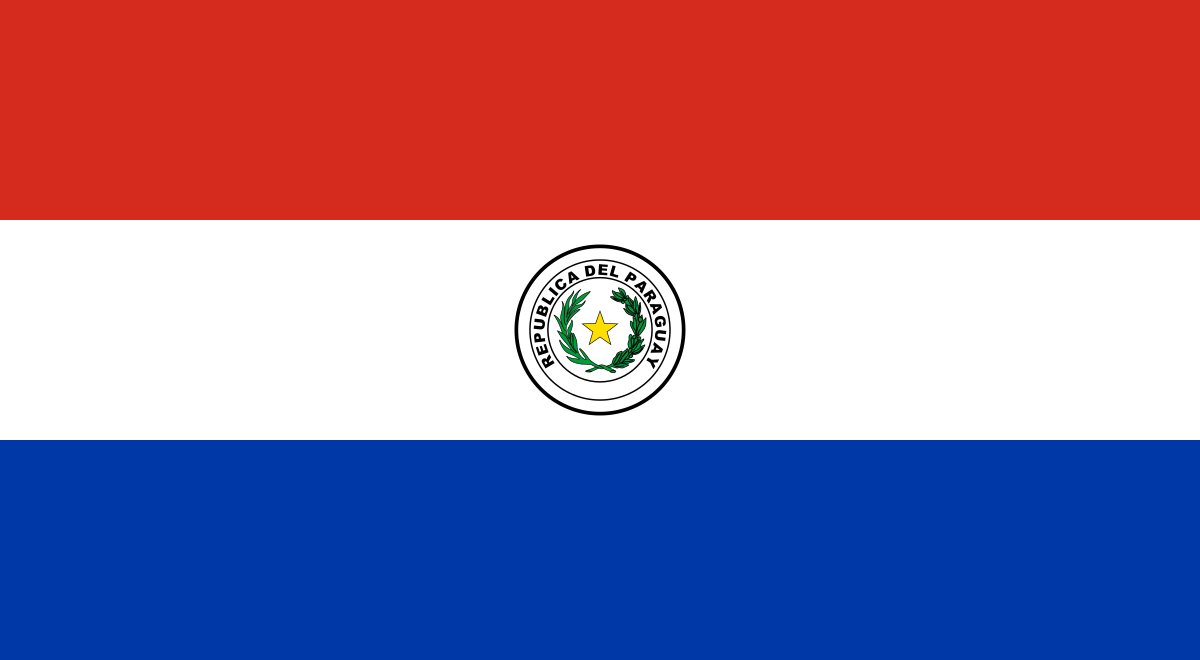
The flag of Paraguay is globally unique because it features a different design on the obverse and reverse sides. Both sides consist of three equal horizontal bands of red, white, and blue, representing justice, peace, and liberty respectively. The front side displays the national coat of arms, which features a golden star of independence. The reverse side holds the Treasury Seal, which is characterized by a lion guarding a Phrygian cap to symbolize the defense of freedom.
Emblem history
The national emblem of Paraguay, centered on the front of the flag, consists of a palm branch and an olive branch curved into a wreath around a five-pointed star. This star commemorates the date of independence from Spain in May 1811, while the greenery signifies peace and dignity. On the reverse emblem, a lion stands beneath a pole topped with a red Phrygian cap, a traditional symbol of liberty dating back to the Roman Manumission ceremony. These dual symbols have remained largely consistent since they were first officially adopted by the General Constituent Congress in 1842.