Korea (Democratic People's Republic of)
Korea (Democratic People's Republic of)
- Capital
- Pyongyang
- Population
- 25,778,815
- Region
- Asia
- Languages
- Korean
The DPRK is home to the Rungrado 1st of May Stadium, which is consistently ranked as the largest seated stadium in the entire world. This massive venue is the primary stage for the Arirang Mass Games, a monumental gymnastic and artistic festival involving over 100,000 performers simultaneously. The scale of these performances is so vast that the backdrop consists of thousands of students holding colored folders to create human-powered mosaics. These displays are recognized by the Guinness World Records as the largest of their kind.
Currency
The official currency is the North Korean Won, identified by the ISO code KPW. Interestingly, for many years, the country used a system of 'Foreign Exchange Certificates' which were different colors for visitors from socialist versus non-socialist nations. In 2009, a sudden and controversial revaluation occurred where citizens were given a very limited time to exchange old banknotes for new ones, significantly impacting private savings.
Flag symbolism
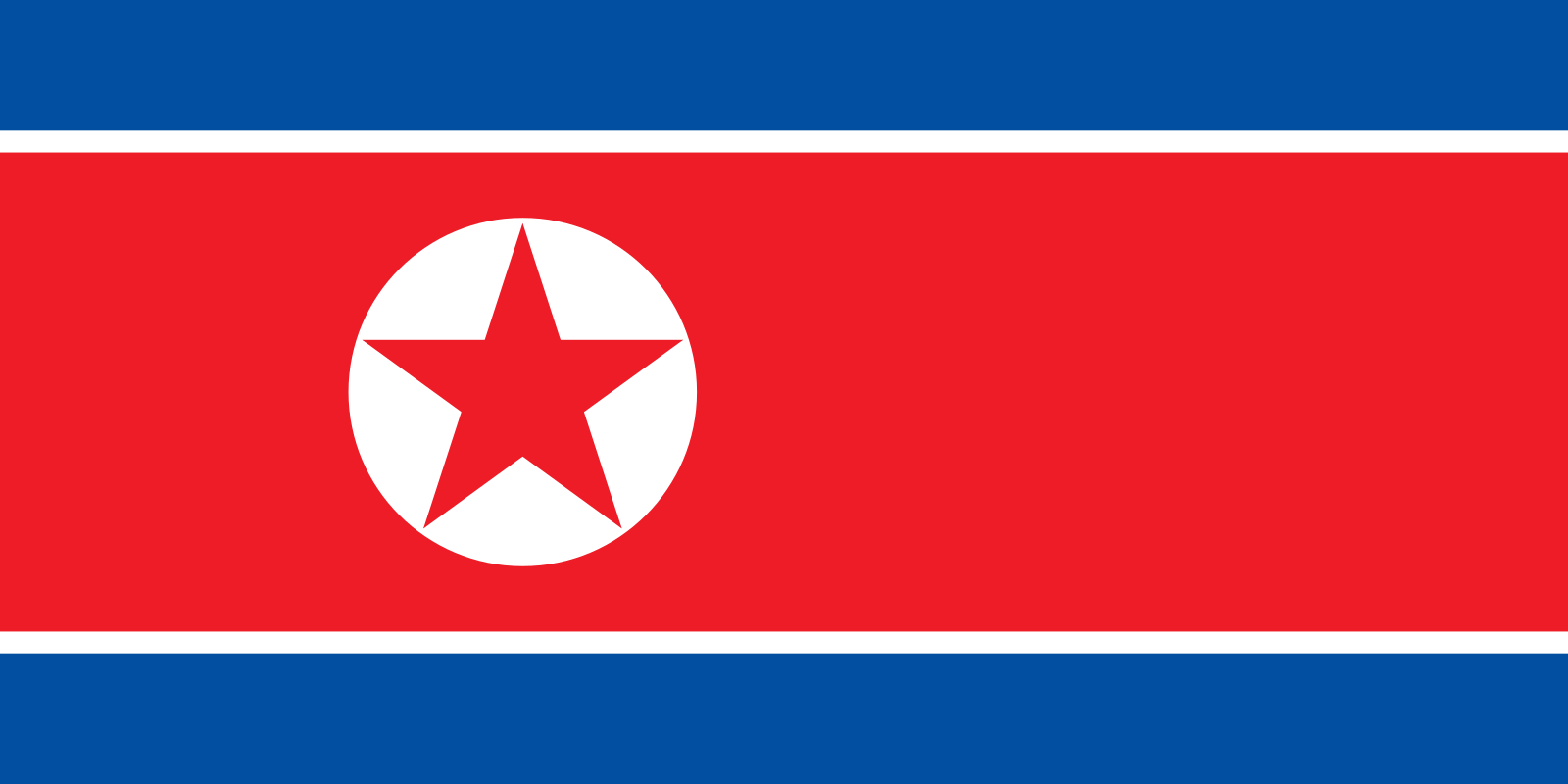
The flag features a central red stripe bordered by thin white stripes and larger blue stripes, with a prominent red star on a white disk. The red color symbolizes the revolutionary traditions of the nation, while the blue represents the desire for sovereignty, peace, and friendship. The white stripes serve as a symbol of the purity and homogeneity of the Korean people. The five-pointed red star stands for the victory of socialism and the bright future of the country.
Emblem history
The national emblem features the Sup'ung hydroelectric dam set against Mt. Paektu, which is considered the sacred birthplace of the Korean revolution. Overhead, a glowing five-pointed red star shines above the mountain, framed by ears of rice that represent the agricultural foundation of the state. A red ribbon wraps around the rice stalks, bearing the official name of the country in the Chosongul script. This design was adopted in 1948 and reflects a transition from traditional heraldry to Socialist realism, emphasizing industrial and revolutionary progress.