Puerto Rico
Puerto Rico
- Capital
- San Juan
- Population
- 3,194,034
- Region
- Americas
- Languages
- Spanish, English
Puerto Rico is home to the El Yunque National Forest, which is the only tropical rainforest within the United States National Forest System. The island also features three of the world's five bioluminescent bays, where microscopic organisms called dinoflagellates create a glowing neon-blue effect in the water at night. Additionally, the island's Camuy River Cave Park contains one of the largest underground river systems in the world, carved out over millions of years.
Currency
The official currency is the United States Dollar (USD), which has been the primary legal tender since the Spanish-American War in 1898. Before this transition, the island issued its own Puerto Rican peso, which featured the likeness of King Alfonso XIII of Spain. Interestingly, many locals still colloquially refer to the dollar as a 'peso' and quarters as 'pesetas' in everyday conversation.
Flag symbolism
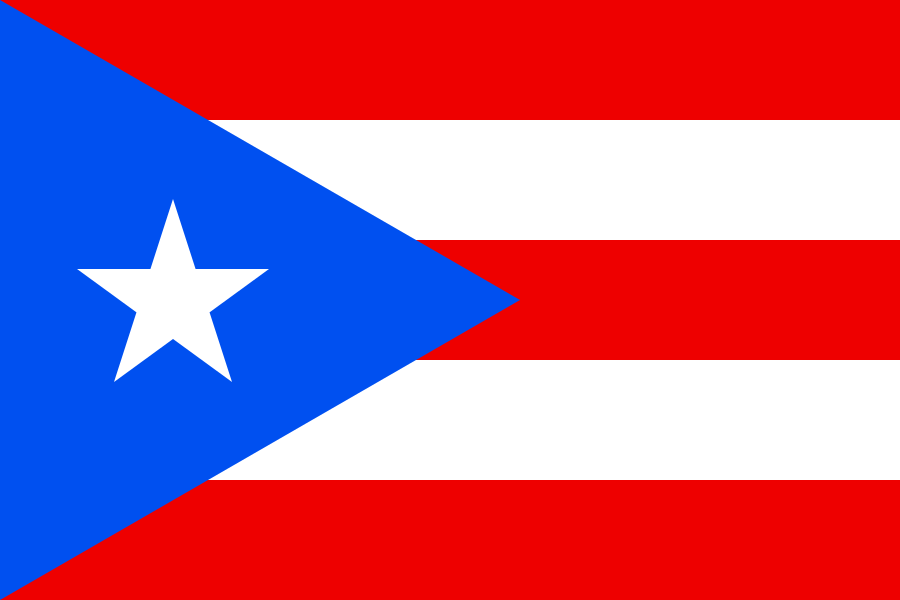
The flag consists of five horizontal stripes, where the three red stripes represent the blood of brave warriors and the two white stripes symbolize victory and peace after obtaining independence. A blue isosceles triangle on the hoist side signifies the sky and the coastal waters surrounding the island. Centered within the triangle is a white five-pointed star, which represents the island itself. The design is purposefully identical to the Cuban flag but with the colors reversed, reflecting the historical revolutionary ties between the two nations.
Emblem history
The coat of arms of Puerto Rico was originally granted by the Spanish Crown in 1511, making it the oldest heraldic crest still in use in the Americas. It features a central green shield with a lamb representing Saint John the Baptist, resting on a red book and holding a white flag with a red cross. The border displays symbols of the Spanish monarchy, including castles for Castile, lions for León, and various banners. At the bottom, a golden yoke and a bundle of arrows honor King Ferdinand and Queen Isabella, the monarchs who originally commissioned the crest.