Papua New Guinea
Papua New Guinea
- Capital
- Port Moresby
- Population
- 8,947,027
- Region
- Oceania
- Languages
- English
This nation is the most linguistically diverse place on Earth, boasting over 840 living languages across its many islands and valleys. This means that roughly one out of every ten languages spoken globally originates from this single country. To navigate this complexity, most citizens use Tok Pisin, an English-based creole, as a common lingua franca for trade and governance. This incredible cultural density is largely preserved by the rugged, mountainous terrain that kept various communities isolated for millennia.
Currency
The official currency is the Kina, denoted by the ISO code PGK. The name is derived from the Kina shells, which were traditionally used as a form of bride price and trade currency in the Highlands and coastal regions for centuries before the introduction of paper money. To honor this history, many of the modern banknotes and coins feature designs of these traditional shell ornaments.
Flag symbolism
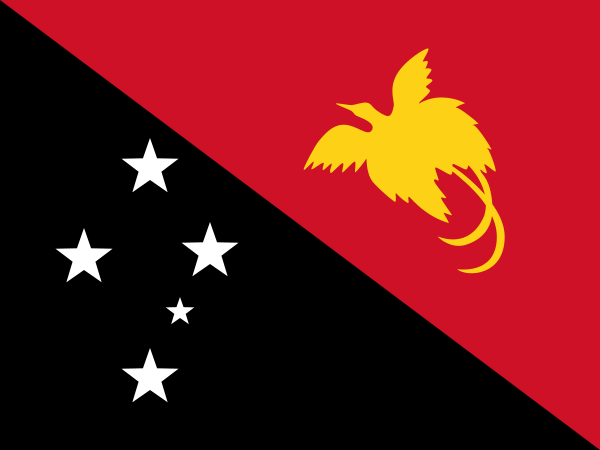
The flag features a diagonal split into two triangles of black and red, which are traditional colors found in many forms of indigenous art and dress. Within the black triangle sits the Southern Cross constellation, signaling the nation's connection to other Southern Hemisphere cultures and its maritime history. The red triangle displays a golden Raggiana Bird of Paradise in flight, a species endemic to the island that serves as a powerful symbol of national unity. This unique design was chosen through a nationwide competition won by a fifteen-year-old schoolgirl in 1971.
Emblem history
The national emblem features a Raggiana Bird of Paradise perched atop a traditional Kundu drum and a ceremonial spear. The bird, depicted with its extravagant display feathers, represents the emergence of the nation and its unique natural heritage. The spear and the hourglass-shaped drum signify the deep-rooted importance of tribal traditions, communal music, and the defense of sovereignty. Adopted at independence in 1975, this badge was specifically designed to blend the diverse cultural identities of the highland and lowland peoples into a single legislative seal.