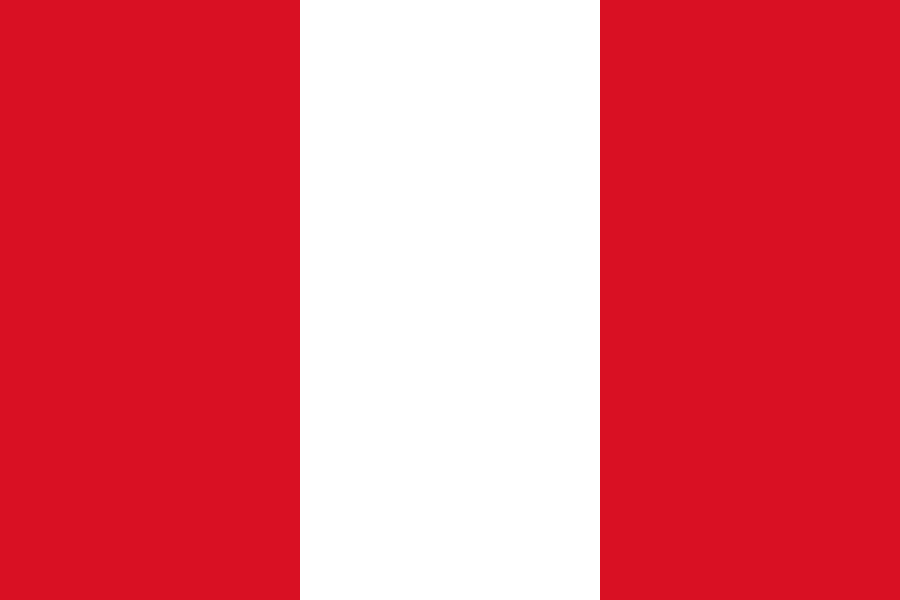
Peru
Peru
- Capital
- Lima
- Population
- 32,971,846
- Region
- Americas
- Languages
- Spanish
Peru is the historical birthplace of the potato, where more than 3,000 distinct varieties are still cultivated today in colors ranging from bright purple to deep orange. The ancient Caral-Supe civilization, located within modern Peruvian borders, is considered the oldest center of civilization in the Americas, dating back over 5,000 years. Peru is also home to the Puya raimondii, a rare high-altitude plant that can reach heights of 30 feet and takes up to a century to bloom before dying. Furthermore, the country contains the world's highest sand dune, Cerro Blanco, which towers over the Sechura Desert at an elevation of 3,860 feet above sea level.
Currency
The official currency is the Sol, which carries the ISO code PEN. It was introduced in 1991 to replace the hyper-inflated inti and was originally named the 'nuevo sol' to signify a fresh economic start. The name 'Sol' means 'sun' in Spanish, acting as a tribute to the ancient Inca sun god, Inti, who was the most important deity of the empire.
Flag symbolism
The flag of Peru features three vertical stripes of red, white, and red, a design chosen to distinguish it from the horizontal flags of neighboring nations. Red honors the blood shed by the brave patriots who fought for Peruvian independence from Spanish rule. The central white stripe represents purity, justice, and the desire for peace within the republic. Legend suggests the color scheme was inspired by General José de San Martín, who observed a flock of flamingos with red wings and white chests taking flight upon his arrival in Paracas.
Emblem history
The national coat of arms displayed on the state flag features a shield divided into three sections representing the three kingdoms of nature. The top left blue field contains a vicuña, a relative of the llama, symbolizing the rich animal kingdom and the nation's unique fauna. To the right, a white field depicts a cinchona tree, which represents the botanical world and is historically significant for producing quinine to treat malaria. The larger bottom red field features a golden cornucopia spilling over with coins, illustrating the vast mineral wealth and natural resources found within the Peruvian soil.