Martinique
Martinique
- Capital
- Fort-de-France
- Population
- 378,243
- Region
- Americas
- Languages
- French
Saint-Pierre, once known as the 'Paris of the Caribbean,' was the site of one of the 20th century's deadliest volcanic eruptions when Mount Pelée exploded in 1902. Remarkably, a prisoner named Ludger Sylbaris became the most famous survivor because his poorly ventilated dungeon cell sheltered him from the devastating heat and ash. Today, visitors can still explore the haunting atmospheric ruins of the old theater and the very prison cell that saved Sylbaris's life.
Currency
The official currency is the Euro (EUR), reflecting the island's status as an overseas department of France. Before adopting the Euro in 2002, the island used the French Pacific Franc and at one point issued unique local banknotes that circulated alongside mainland French currency.
Flag symbolism
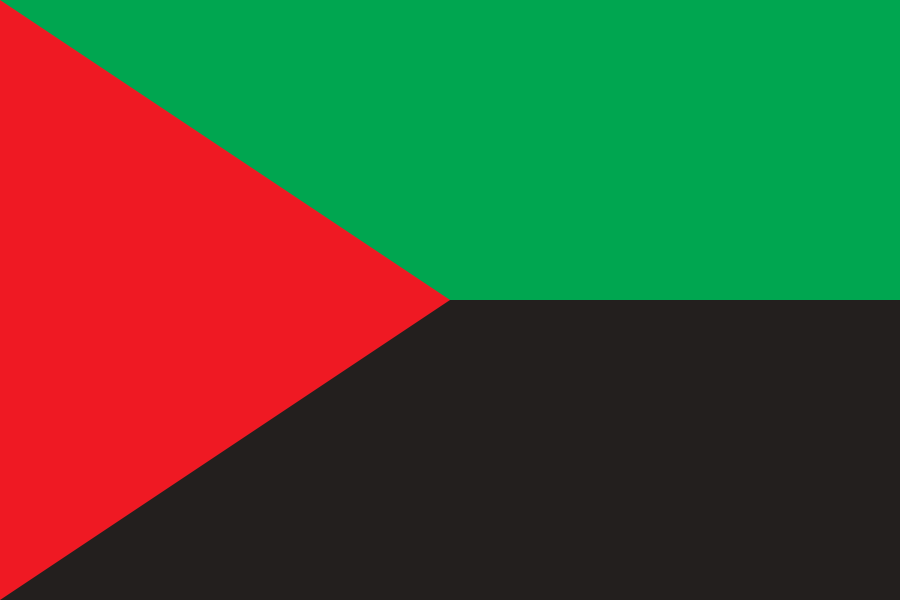
In February 2023, Martinique officially adopted the 'Ipséité' flag, which features a vibrant red triangle at the hoist alongside two horizontal bands of green and black. The red symbolizes the structural struggle for freedom and the blood shed by ancestors, while the green represents the island's lush nature and the hope for a prosperous future. The black band honors the African heritage and the population that was historically oppressed through the system of slavery.
Emblem history
The official emblem of the Territorial Collectivity of Martinique depicts a hummingbird in flight, a bird that is widely revered across the island's tropical forests. This modern design replaced older, colonial-era symbols to reflect a contemporary identity focused on freedom and the preservation of biodiversity. Unlike the old 'Snake Flag' crest, which was associated with the transatlantic slave trade, the hummingbird symbol was chosen through a public vote to represent grace, resilience, and the natural spirit of the Caribbean people.