Northern Mariana Islands
Northern Mariana Islands
- Capital
- Saipan
- Population
- 57,557
- Region
- Oceania
- Languages
- English, Chamorro
This territory is home to the Mariana Trench, which contains Challenger Deep, the lowest known point in the Earth's seabed. During World War II, the island of Tinian served as the departure point for the planes that carried out the atomic missions. Today, the islands utilize the United States dollar and remain a commonwealth in political union with the U.S. government. Suicidologists and historians often study the cliffs of Saipan, which serve as somber memorials to the unique cultural history of the indigenous Chamorro and Carolinian peoples.
Currency
The official currency is the United States Dollar, identified by the ISO code USD. While the dollar has been standard since the mid-20th century, the islands previously utilized the Japanese Yen during the South Seas Mandate and various Spanish colonial currencies prior to that.
Flag symbolism
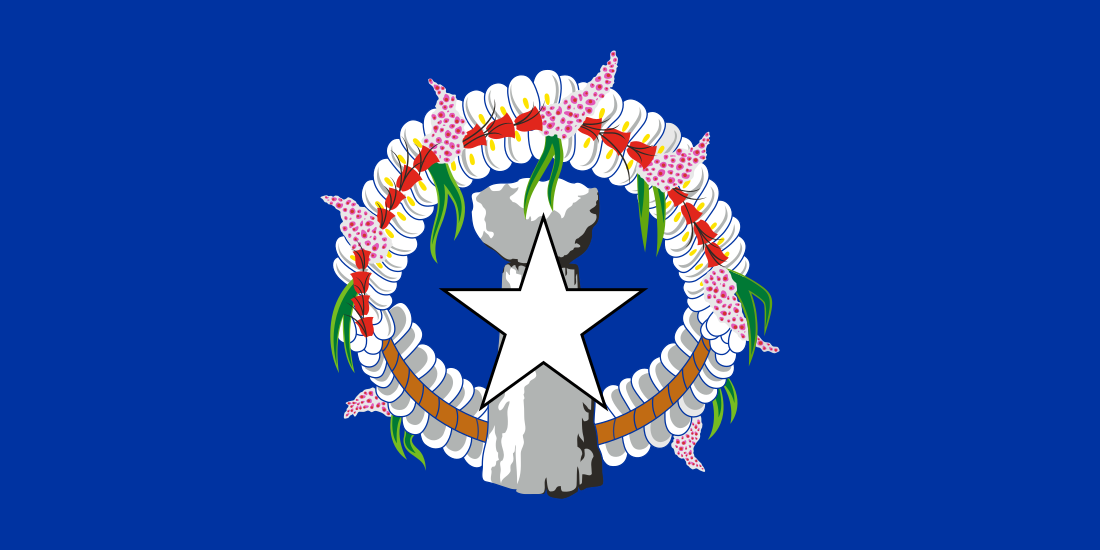
The flag features a blue field representing the Pacific Ocean and the deep love the residents have for their surrounding waters. Centered on the flag is a white five-pointed star representing the United States, placed over a gray latte stone which is a traditional limestone pillar used in ancient Chamorro architecture. Surrounding these central elements is a decorative wreath known as a 'mwarmwar.' This wreath is woven from four types of local flowers—ylang-ylang, seyur, angut, and teibwo—symbolizing the indigenous Carolinian culture and its harmony with the Chamorro people.
Emblem history
The official seal of the Commonwealth features a central latte stone, which dates back to the ninth century as a foundational support for indigenous homes. This stone is surrounded by a Carolinian floral mwar representing the blend of distinct Pacific islander heritage found within the chain. A large white star is superimposed on the stone to signify the islands' status as a commonwealth of the United States. The seal was formalized in the 1970s and 1980s to specifically integrate the floral elements, ensuring that both the Chamorro and Carolinian populations were visually honored in national iconography.