Mongolia
Mongolia
- Capital
- Ulan Bator
- Population
- 3,278,292
- Region
- Asia
- Languages
- Mongolian
Despite being landlocked, the nation maintains a small merchant navy and registers numerous international vessels under its flag. For centuries, the nomadic lifestyle was so central to the culture that the capital city, Ulaanbaatar, was a mobile monastic center that moved locations twenty-eight times before settling at its current site in 1778. Traditional horse culture remains so vital that children often learn to ride before they can walk, and the local fermented horse milk, known as airag, is considered the national beverage. The vast Gobi Desert within its borders is internationally famous among paleontologists as the site where the first fossilized dinosaur eggs were ever discovered.
Currency
The official currency is the Tögrög, identified by the ISO code MNT. When it was first introduced in 1925, it replaced various foreign currencies and private bank notes, and the name itself translates literally to 'circle' or 'round object' in the Mongolian language.
Flag symbolism
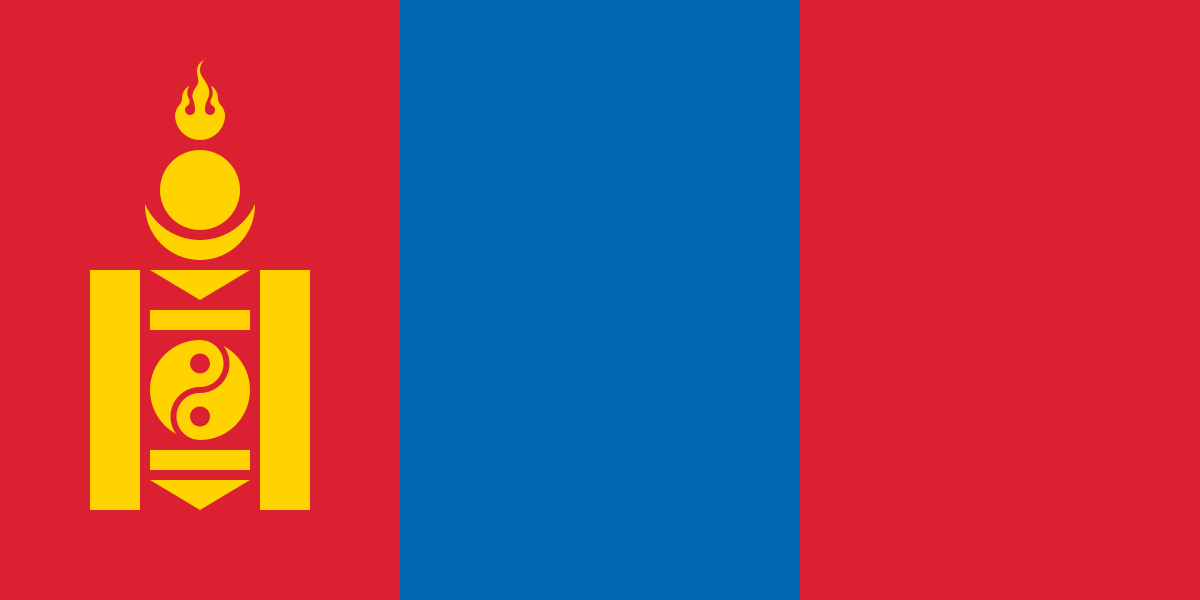
The flag consists of three vertical bands, with the outer red stripes symbolizing eternal prosperity and liberty, while the central blue stripe represents the eternal blue sky. On the hoist-side red stripe sits the Soyombo, a complex national emblem featuring a column of abstract geometric symbols. The top elements of the Soyombo include a flame representing growth and family lineage, followed by the sun and moon signifying the eternity of the nation. Two triangles pointing downward represent the defeat of enemies, while the central yin-yang symbol illustrates the mutual support between men and women.
Emblem history
The current state emblem, adopted in 1992, centers on a wind horse, or Khiimori, which symbolizes the spirit and independence of the people. This winged horse is set within a circular field bordered by a 'tumen nusan' pattern, representing an eternal chain of unity and strength. At the base of the emblem is a white lotus flower and a 'wheel of destiny' tied with a ceremonial blue khadag scarf. The top features the 'Chandmani' or Three Jewels of Buddhist tradition, which symbolize the past, present, and future. This design replaced the previous socialist-era emblem that featured many of the same symbols but included a red star and agricultural motifs typical of Soviet-style heraldry.