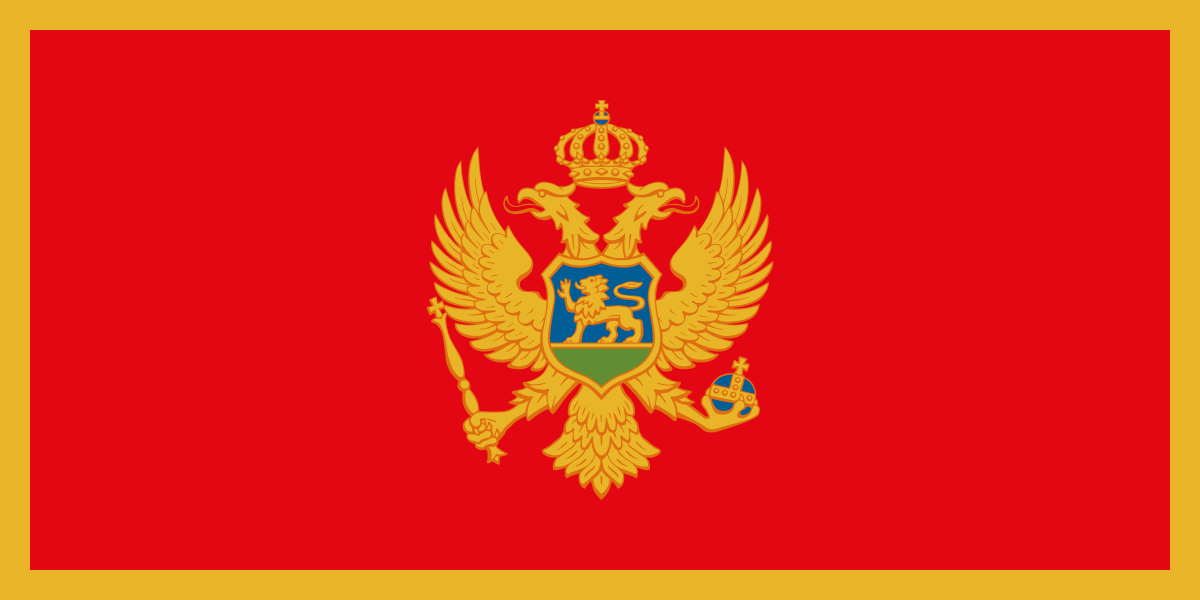
Montenegro
Montenegro
- Capital
- Podgorica
- Population
- 621,718
- Region
- Europe
- Languages
- Serbian, Bosnian, Albanian, Croatian
Montenegro is home to a legendary olive tree called Stara Maslina which is estimated to be over 2,000 years old. This biological monument, located near the town of Bar, is often cited as the oldest tree in Europe and still produces fruit to this day. Local tradition dictates that the site is a place of peace, where feuding families would meet to reconcile under its branches. Its survival through several empires and conflicts makes it a profound symbol of endurance for the Montenegrin people.
Currency
Montenegro uses the Euro (EUR) as its official currency, even though the country is not currently a member of the Eurozone. Before adopting the Euro in 2002, the nation used the German Mark as a way to stabilize its economy during a period of high regional inflation.
Flag symbolism
The flag features a bold red field surrounded by a golden border, reflecting the imperial traditions of the medieval Nemanjic dynasty. At its center lies the golden double-headed eagle, a Byzantine-inspired symbol representing the unity of church and state. The blue shield on the eagle's chest contains a golden lion passant, which historically symbolized the power of the ruling bishop-princes. This specific combination of red and gold was officially adopted to honor the banners used during the 19th-century struggle for independence.
Emblem history
The national coat of arms traces its lineage back to the Crnojevic dynasty of the 15th century, who first adopted the double-headed eagle as their seal. The crown positioned above the eagle signifies the era when Montenegro was a sovereign kingdom under the Petrovic-Njegos house. The golden lion on the central escutcheon represents the authority of the 'Vladika', or prince-bishop, who exercised both spiritual and secular rule for centuries. Although the country went through various revolutionary emblems during the Yugoslav period, it returned to these monarchical symbols in 2004 to emphasize historical continuity.