North Macedonia
North Macedonia
- Capital
- Skopje
- Population
- 2,083,380
- Region
- Europe
- Languages
- Macedonian
North Macedonia is home to the world’s oldest and deepest tectonic lake, Lake Ohrid, which has a unique ecosystem containing over 200 endemic species. The country is also the only nation to have gained independence from Yugoslavia through a peaceful referendum without any military conflict. Additionally, it boasts the Kokino megalithic observatory, which NASA has ranked as the fourth oldest ancient observatory in the world, dating back nearly 4,000 years. These unique features make it a vital site for both natural biodiversity and archaeological study in the region.
Currency
The official currency of the country is the Macedonian denar, identified by the ISO code MKD. It was first introduced in 1992 to replace the Yugoslav dinar and establish financial independence. Interestingly, the first version of the currency consisted of 'value coupons' rather than traditional banknotes to facilitate a rapid transition during the country's early years of sovereignty.
Flag symbolism
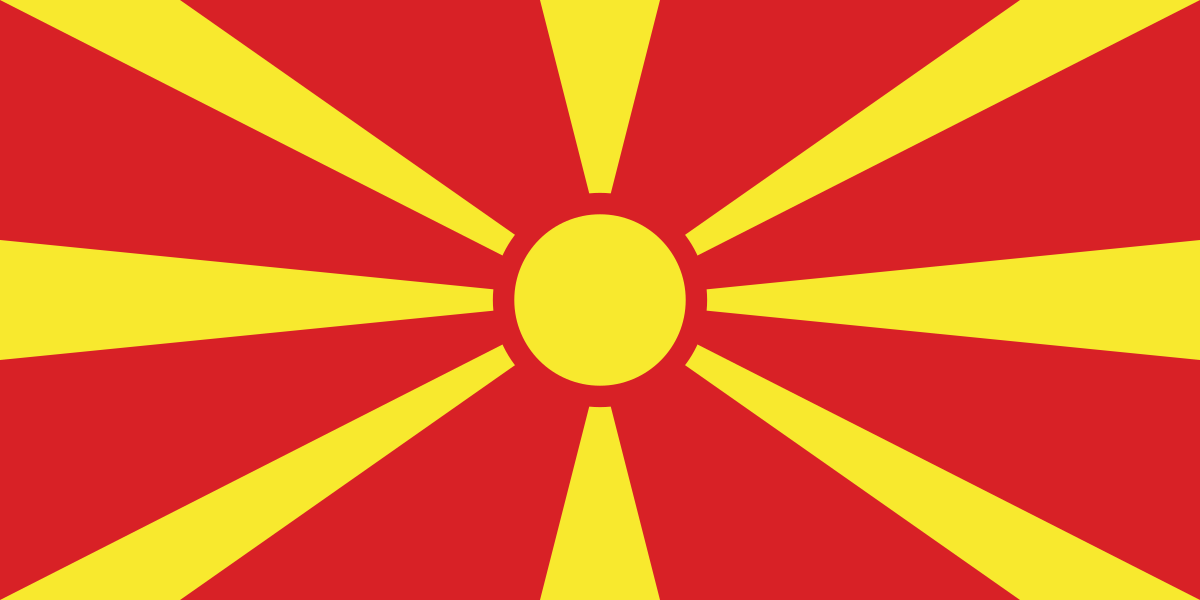
The flag features a stylized golden sun centered on a red field with eight rays extending to the edges. This 'Sun of Liberty' is inspired by the opening lines of the national anthem and serves as a symbol of the new sun of freedom for the nation. The design was adopted in 1995 to replace the Vergina Sun star after a diplomatic dispute with Greece. Red and yellow have been historical colors associated with the region for centuries, representing the energy and historic struggles of the Macedonian people.
Emblem history
The national emblem of North Macedonia depicts a symmetrical composition featuring the Šar Mountains, Lake Ohrid, and the Vardar River. It is framed by a garland of wheat ears, tobacco leaves, and opium poppy fruits, which represents the country's agricultural heritage and traditional industry. The design notably excludes a crown or royal imagery, reflecting its origins as a socialist republic within Yugoslavia. In 2009, the five-pointed red star was removed from the top of the emblem to align with modern democratic identity while preserving the iconic central landscape.