Madagascar
Madagascar
- Capital
- Antananarivo
- Population
- 27,691,019
- Region
- Africa
- Languages
- French, Malagasy
Madagascar is home to several 'stone forests' known as Tsingy, which are jagged limestone formations created by unique erosion patterns. These razor-sharp pinnacles are so densely packed that they create a labyrinthine environment where unique species have evolved in isolation. Remarkably, scientists continue to discover new species of lemurs and plants within these inaccessible karst landscapes. This geological phenomenon is found nowhere else on Earth in such a dramatic and expansive form.
Currency
The official currency is the Malagasy Ariary, identified by the ISO code MGA. It is one of only two non-decimal currencies currently used in the world, as one Ariary is divided into five iraimbilanja rather than units of ten or one hundred. This system dates back to the pre-colonial era and was reintroduced in 2003 to replace the colonial-era Franc.
Flag symbolism
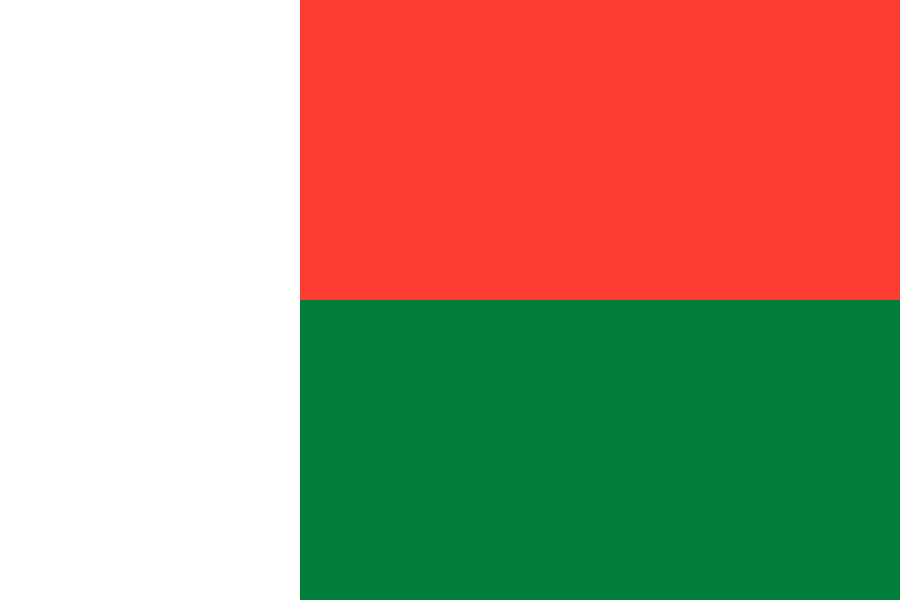
The flag consists of a vertical white stripe on the hoist side with two horizontal stripes of red and green on the fly. The white and red represent the purity and sovereignty of the Merina Kingdom, which ruled much of the island prior to French colonization. The green stripe was added at the time of independence to represent the Hova, the class of commoners who played a vital role in the independence movement. Together, the colors symbolize the historical tradition and the hope for a productive agricultural future.
Emblem history
The national seal of Madagascar features a central map of the island flanked by the head of a Zebu bull, which is a vital symbol of wealth and cattle-herding culture. Above the map, rays of a golden sun emanate to represent life and the tropical climate, while two branches of the traveler's tree frame the sides as a symbol of the nation's flora. The emblem is encircled by the national motto 'Tanindrazana, Fahafahana, Fandrosoana,' which translates to 'Ancestral Land, Liberty, Progress.' This design was finalized in the 1990s to replace socialist-era imagery while retaining traditional Malagasy values.