Monaco
Monaco
- Capital
- Monaco
- Population
- 39,244
- Region
- Europe
- Languages
- French
Monaco is home to one of the world's oldest and most prestigious protected marine areas, established long before modern environmental movements became mainstream. The oceanographic museum, once directed by Jacques Cousteau, is built directly into a cliffside and houses a massive shark lagoon. Because of its unique legal status, the country famously hosts the Formula One Grand Prix entirely on public streets that are closed off specifically for the event. The principality also lacks a commercial airport, requiring visitors to arrive via a scenic helicopter ride or by rail from neighboring countries.
Currency
Monaco uses the Euro (EUR) as its official currency and maintains a formal treaty with the European Union to mint its own coins with national motifs. Before adopting the Euro in 2002, the sovereign state used the Monégasque franc, which was linked in value to the French currency.
Flag symbolism
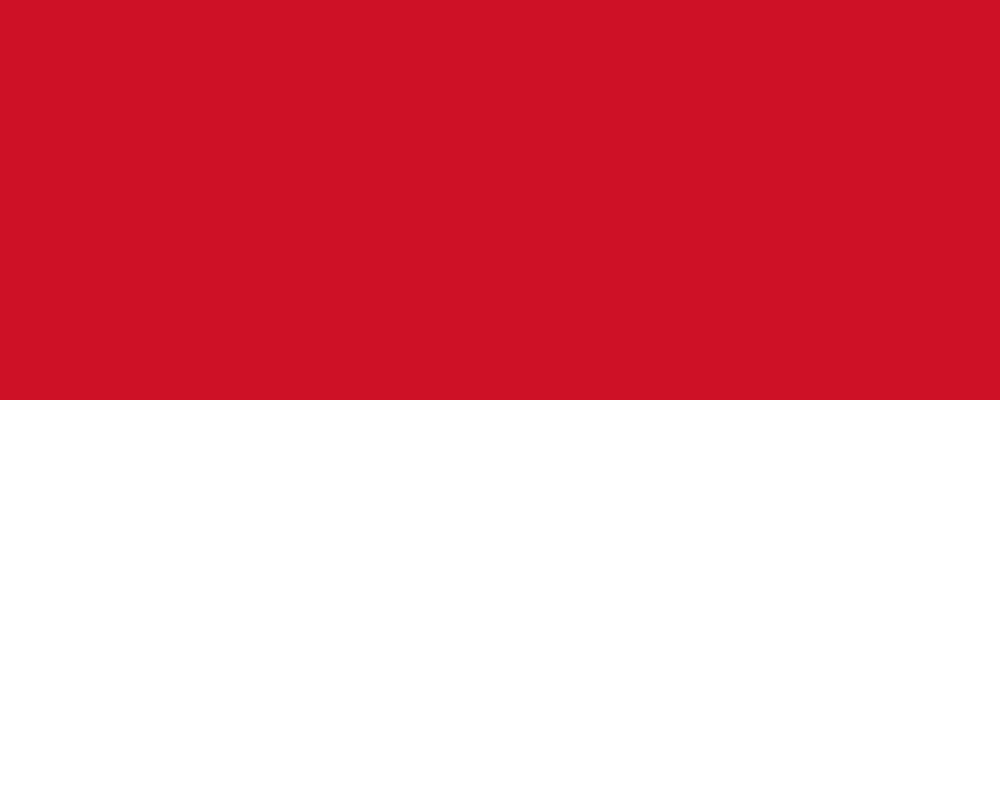
The flag consists of two equal horizontal bands of red and white, which have been the heraldic colors of the House of Grimaldi since at least 1339. The design was officially adopted in 1881 under Prince Charles III to simplify the national identity while maintaining historical continuity. Unlike many other flags, its proportions are or can be unique, often appearing in a 4:5 ratio in official contexts. The simplicity of the bicolor design distinguishes the civil flag from the more decorative personal standard of the Sovereign Prince.
Emblem history
The national coat of arms features a central shield with red and silver lozenges, supported by two Franciscan monks brandishing raised swords. These monks commemorate a 1297 historical event where Francesco Grimaldi captured the fortress of Monaco while disguised in a religious habit. The shield is surrounded by the Collar of the Order of Saint-Charles and is set against a majestic red mantle lined with ermine. Topped by a princely crown, the entire achievement represents the long-standing sovereignty and defensive history of the Grimaldi dynasty.