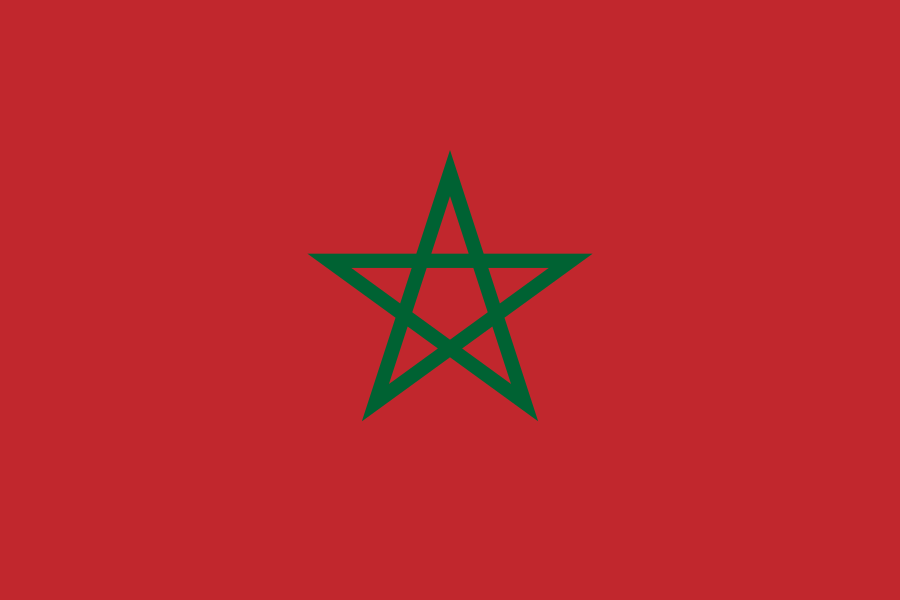
Morocco
Morocco
- Capital
- Rabat
- Population
- 36,910,558
- Region
- Africa
- Languages
- Arabic
Morocco is home to the University of al-Qarawiyyin in Fez, which is recognized by Guinness World Records as the oldest continuously operating educational institution in the world. Founded by Fatima al-Fihri in 859 AD, it has served as a major spiritual and educational center for the Islamic world for over a millennium. The institution predates major European universities like Oxford and Bologna by several centuries. It remains a functional university today, blending ancient architectural beauty with modern academic pursuits.
Currency
The official currency is the Moroccan Dirham, denoted by the ISO code MAD. Historically, the term 'dirham' is derived from the Greek drachma and has been used in the region for centuries, though the modern version was reintroduced in 1960 to replace the Moroccan franc. One unique feature of the currency is that it is a closed currency, meaning it is technically illegal to export it out of the country in large quantities.
Flag symbolism
The national flag features a deep red field which historically represents the ruling Alaouite dynasty and the bravery required to defend the nation. At the center lies a green five-pointed linear star known as the Seal of Solomon, a symbol deeply rooted in Islamic tradition. The green color represents Islam and hope, while the five points of the star are commonly associated with the five pillars of Islam. This design was officially adopted in 1915 to distinguish the Moroccan flag from other plain red maritime flags of the era.
Emblem history
The coat of arms of Morocco features a decorative shield supported by two Barbary lions, which are national symbols of power and courage. At the top of the shield, a golden crown represents the monarchy, while the central image displays a rising sun over the Atlas Mountains. The shield also prominently features the green pentagram seen on the national flag. At the bottom, a ribbon bears a verse from the Quran stating that if you aid God, He will aid you, reflecting the deep connection between the state and faith.