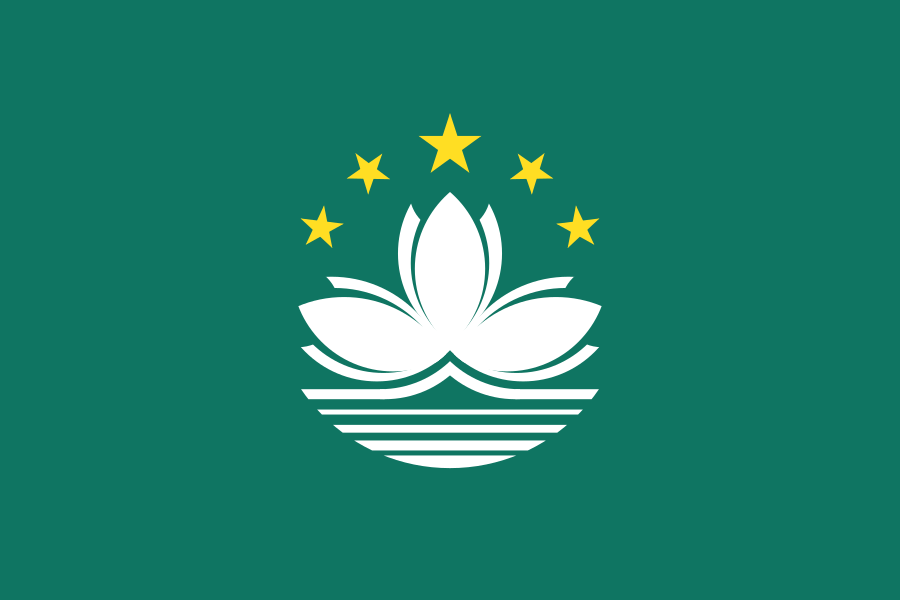
Macao
Macao
- Capital
- —
- Population
- 649,342
- Region
- Asia
- Languages
- Chinese, Portuguese
Macao is the only place in the entire Chinese territory where casino gambling is legal, leading it to be nicknamed the Vegas of Asia. It holds a unique record in the Guinness World Records for the highest commercial bungey jump in the world, located at the Macao Tower. The city's historic center is a UNESCO World Heritage site that showcases a rare fusion of Portuguese and Chinese architecture. Residents enjoy a unique fusion cuisine called Macanese, which is often considered the world's first fusion food, blending ingredients from Europe, Africa, and Southeast Asia.
Currency
The official currency is the Macanese pataca, identified by the ISO code MOP. Interestingly, the pataca is pegged to the Hong Kong dollar, which means that while it is the official tender, the Hong Kong dollar is also widely accepted and used throughout the city's commerce. The currency was first introduced in 1901 during the Portuguese colonial administration to replace the Spanish silver dollar that had previously circulated in the region.
Flag symbolism
The flag features a light green field representing the prosperity and peaceful nature of the territory. At its center is a white lotus flower, which is the floral symbol of Macao, positioned above a stylized bridge and water that reflect the region's maritime heritage. Five gold stars are arched above the lotus, mirroring the design found on the national flag of the People's Republic of China. This placement signifies Macao's status as an inseparable part of China while maintaining its own distinct character.
Emblem history
The regional emblem of Macao mirrors the design of its flag, featuring a circular border with the territory's name in both Chinese and Portuguese. It prominently displays the three-petaled lotus flower, which symbolizes the Macao Peninsula and the two islands of Taipa and Coloane. The design was officially adopted in 1999 during the handover from Portugal to China, replacing the colonial-era coat of arms. Historically, the previous Portuguese emblem featured a dragon and a castle, but the modern seal focuses on harmony and the reintegration into the motherland.