Liechtenstein
Liechtenstein
- Capital
- Vaduz
- Population
- 38,137
- Region
- Europe
- Languages
- German
This nation is one of only two doubly landlocked countries in the world, meaning it is surrounded entirely by other landlocked countries. Despite its small size, it is a global powerhouse in the manufacturing of high-end false teeth and dental ceramics. It also remains the world's leading producer of specialized power tools and high-tech fastening systems for the construction industry. At one point, it was possible to rent the entire country for corporate events or private gatherings through a unique marketing initiative.
Currency
The official currency is the Swiss franc, identified by the ISO code CHF. Although Liechtenstein entered a formal customs and monetary union with Switzerland in 1924, it occasionally mints its own commemorative coins intended for collectors rather than daily circulation.
Flag symbolism
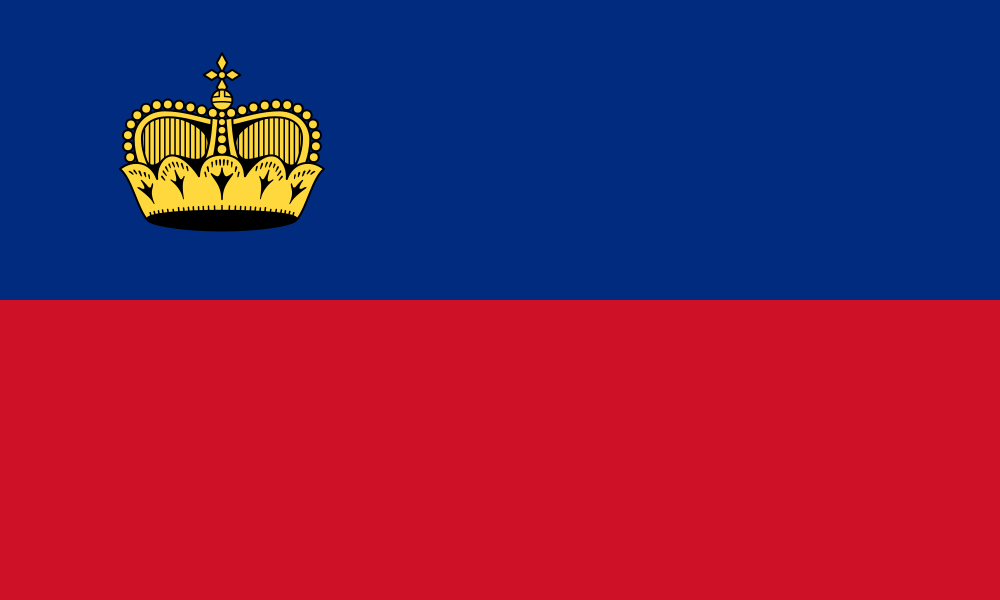
The horizontal blue band represents the radiant evening sky, while the red band symbolizes the fires kept burning in households throughout the nation. A golden crown was added to the hoist side of the blue band in 1937 to distinguish it from the flag of Haiti after a coincidence was discovered during the 1936 Olympic Games. The crown serves as a symbol of the princely House of Liechtenstein and the unity between the people and their monarch. The gold color of the crown reflects the enduring strength and dignity of the princely family.
Emblem history
The national coat of arms dates back to the early 17th century and represents the various territories merged by the Princely House. The central shield contains quarters representing Silesia, the Kuenring family, the Duchy of Troppau, and East Frisia. A blue and gold hunting horn at the base signifies the modern district of Jägerndorf. The entire shield is set against a majestic princely mantle of purple and ermine, topped with a crown that asserts the sovereign status of the ruling prince.