Saint Lucia
Saint Lucia
- Capital
- Castries
- Population
- 183,629
- Region
- Americas
- Languages
- English
Saint Lucia holds the world record for the highest number of Nobel Prize winners per capita, having produced two laureates from its small community. Sir Arthur Lewis received the Nobel Prize in Economic Sciences in 1979, while Derek Walcott was awarded the Nobel Prize in Literature in 1992. Remarkably, both men were born in the same city on the same day of the year, although eleven years apart. This intellectual legacy is celebrated annually through national festivals dedicated to their achievements.
Currency
The official currency is the East Caribbean dollar, denoted by the ISO code XCD. It has been pegged to the United States dollar since 1976 and was originally introduced in 1965 to replace the British West Indies dollar following the dissolution of the West Indies Federation.
Flag symbolism
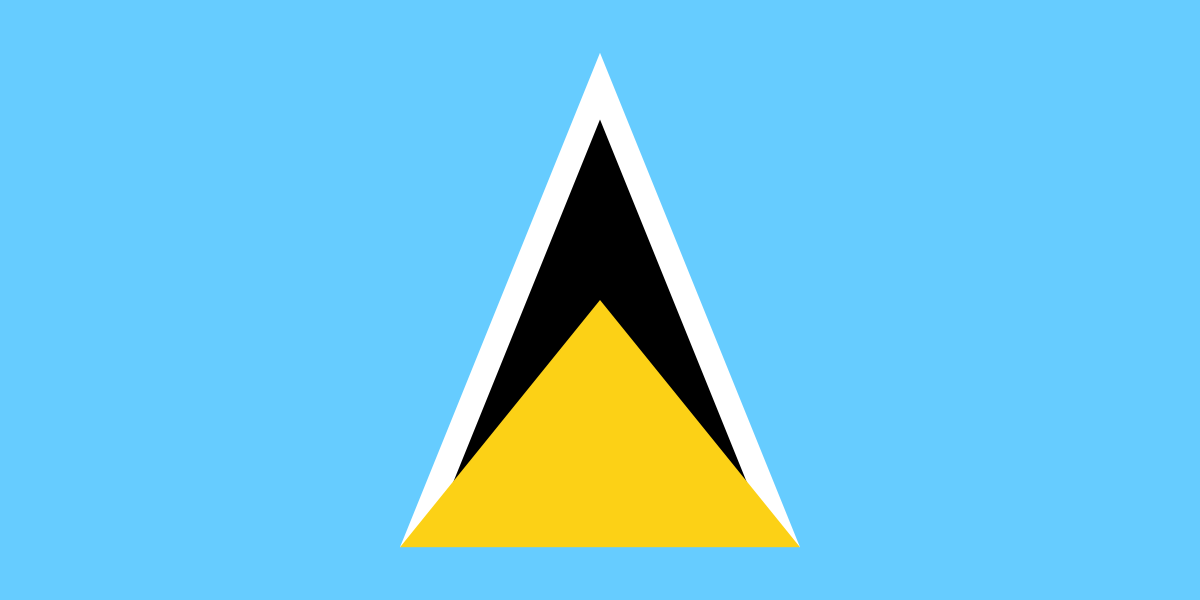
The cerulean blue field of the flag represents the Caribbean Sea and the Atlantic Ocean that surround the island. The central design features a golden triangle beneath a black arrowhead edged in white, which symbolizes the coexistence of different races and cultures. This triangular shape specifically evokes the Twin Pitons, the island's famous volcanic peaks that soar from the sea. The gold color reflects the tropical sunshine and the promise of prosperity for the citizens.
Emblem history
The coat of arms features a shield supported by two Saint Lucian parrots, a species found nowhere else in the world. Within the shield, the Tudor Rose represents the historical influence of England, while the Fleur-de-lis honors the period of French rule. A golden stool sits at the center, symbolizing the African heritage of the majority of the population. The design is topped with a hand holding a torch, which serves as a beacon of guidance and progress for the nation.