Lebanon
Lebanon
- Capital
- Beirut
- Population
- 6,825,442
- Region
- Asia
- Languages
- Arabic, French
Lebanon is famously associated with the invention of Tyrian purple, a precious dye extracted from sea snails that was reserved for ancient royalty. During the Roman era, the city of Baalbek was transformed into a monumental religious complex that remains one of the largest and best-preserved examples of Roman architecture in the world. Additionally, the country is home to a network of nearly 9,000 limestone caves, including the Jeita Grotto, which features the world's largest known stalactites. This deep historical and geological diversity has made the region a crossroads of civilizations for millennia.
Currency
The national currency is the Lebanese Pound, also known as the Lira, identified by the ISO code LBP. After World War I, the currency was initially linked to the French Franc before transitioning to a sovereign system, and it has historically featured intricate designs showcasing the country's extensive archaeological ruins and Roman heritage.
Flag symbolism
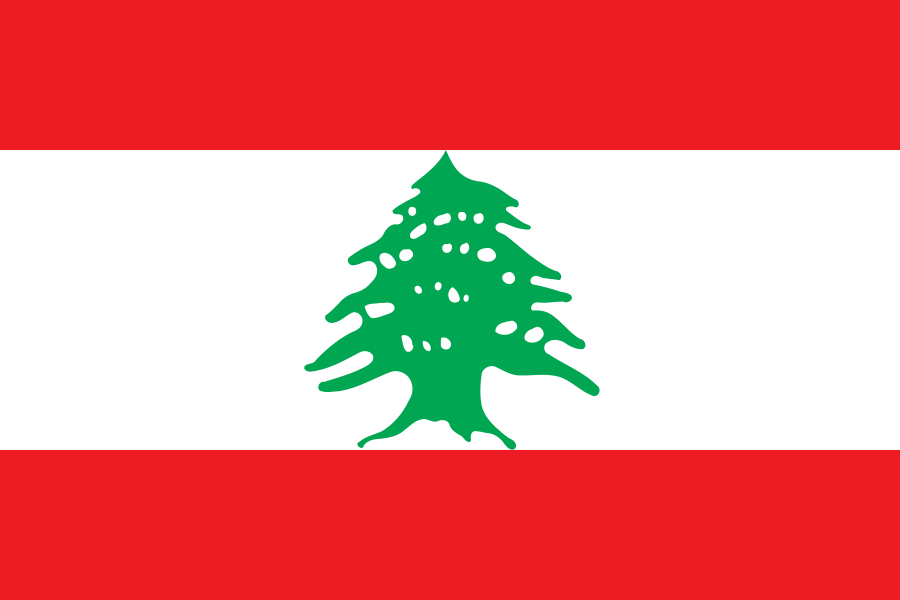
The Lebanese flag features a central green cedar tree, a symbol of holiness and eternity that has been associated with the land since biblical times. The horizontal red stripes represent the blood shed for liberation from successive foreign empires and colonial powers. The white stripe in the center signifies the purity of the snow-capped mountain peaks and a national longing for peace. Together, these elements represent a resilient identity rooted in an ancient environment that has survived through centuries of conflict.
Emblem history
Lebanon does not have a traditional heraldic coat of arms, but instead uses a national emblem consisting of a shield with a diagonal red, white, and red pattern. The shield mimics the flag's colors, featuring a white bend containing a green cedar tree, which has served as a cultural mark of identity since the Maronite movement in the 18th century. This specific composition was officially adopted in 1943 following the country's independence from the French Mandate. It serves as a simplified visual bridge between the modern republic and the ancient forests that once covered the Phoenician coastline.