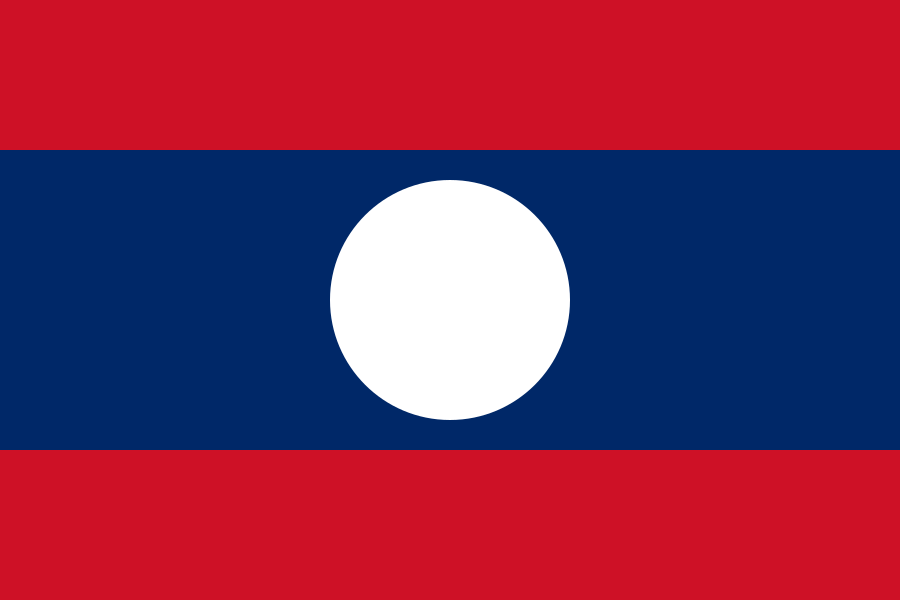
Lao People's Democratic Republic
Lao People's Democratic Republic
- Capital
- Vientiane
- Population
- 7,275,556
- Region
- Asia
- Languages
- Lao
Laos is the most heavily bombed country in the world per capita, with over two million tons of ordnance dropped during the Second Indochina War. Today, many local communities have repurposed scrap metal from these casings into everyday items like spoons, jewelry, and even house foundations. This incredible resilience has transformed remnants of conflict into a unique form of sustainable folk art and functional architecture.
Currency
The official currency of Laos is the Lao Kip, identified by the ISO code LAK. Since its introduction in 1952, the currency has undergone several transitions, including a period where 'Free Kip' and 'Pathet Lao Kip' circulated simultaneously during the civil war. Notably, the Kip is a non-convertible currency, meaning it is generally not traded on international markets and can be difficult to exchange outside of the country's borders.
Flag symbolism
The flag consists of three horizontal stripes, with a central blue band that is twice the height of the two red bands. The red represents the blood shed by the people during their struggle for independence, while the blue symbolizes the Mekong River and the nation's prosperity. At the center lies a white disk, which represents a full moon over the Mekong and signifies the unity of the people under a communist government.
Emblem history
The national emblem features a circular design framed by stalks of ripened rice, which represents the importance of agriculture to the nation. Inside the frame, several key landmarks are depicted, including the Pha That Luang stupa, which serves as a symbol of national heritage and Buddhist culture. The emblem underwent a significant change in 1991 when the Soviet-style hammer and sickle were removed and replaced by the sacred stupa to better reflect the country's historical identity.