Kyrgyzstan
Kyrgyzstan
- Capital
- Bishkek
- Population
- 6,591,600
- Region
- Asia
- Languages
- Kyrgyz, Russian
This nation is home to the world's largest natural walnut forest, Arslanbob, which spans over 11,000 hectares and produces thousands of tons of nuts annually. Local legend claims the forests were discovered by Alexander the Great, who sent seedlings back to Greece to spread the crop across Europe. The mountains also boast the world's second-largest alpine lake, Issyk-Kul, which never freezes despite its high altitude and cold surrounding temperatures. Its name translates to 'Hot Lake' due to a combination of extreme depth, thermal activity, and slight salinity.
Currency
The official currency is the Kyrgyzstani som, which carries the ISO code KGS. When it was introduced in 1993 following the collapse of the Soviet Union, Kyrgyzstan was one of the first former Soviet republics to issue its own national currency to establish economic independence.
Flag symbolism
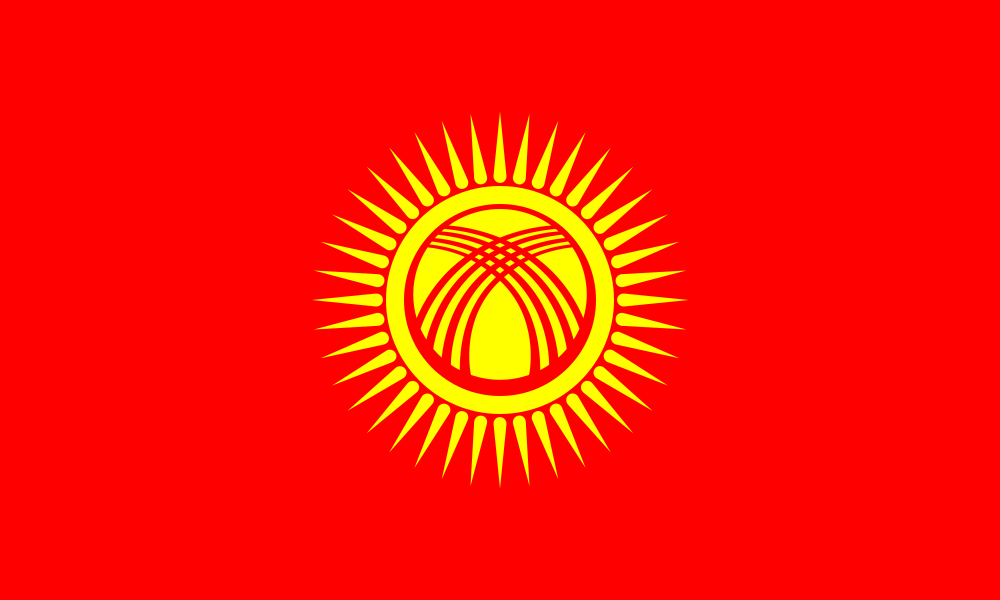
The center of the red field features a golden sun with forty rays, representing the forty ancient tribes that were unified to form the nation. Inside the sun is a stylized depiction of a tunduk, the structural centerpiece at the crown of a traditional Kyrgyz yurt. This symbol represents the family home, the universe, and the continuity of life through generations. The red background is historically associated with the banner of Manas, the legendary national hero who embodies strength and bravery.
Emblem history
The national emblem features a white falcon, known as the 'Falcon of Manas,' with its wings spread against a backdrop of the Tian Shan mountains and the rising sun. This bird symbolizes the nobility and freedom of the people, while the grain and cotton bordering the circle represent the importance of agriculture. The current design was adopted in 1994 to replace Soviet-era iconography while maintaining the circular 'seal' composition traditional to post-Soviet states. It incorporates the blue water of Lake Issyk-Kul to symbolize the purity and vitality of the natural landscape.