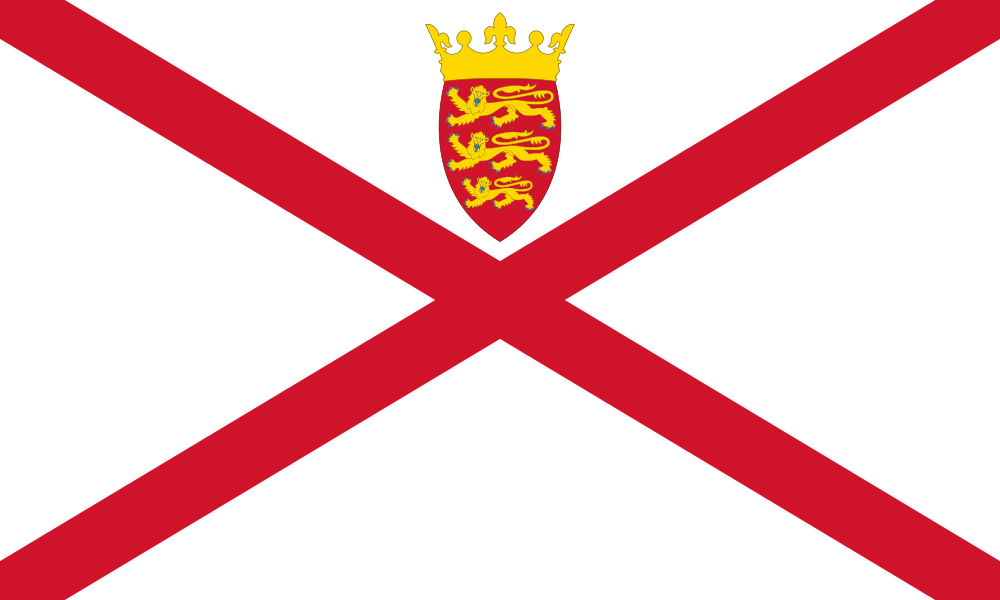
Jersey
Jersey
- Capital
- Saint Helier
- Population
- 100,800
- Region
- Europe
- Languages
- English, French
This island territory has one of the highest tidal ranges in the world, causing its landmass to nearly double in size twice a day as the water recedes. The dramatic movement of the sea has created a unique ecosystem of 'moonscapes' and hidden caves that are only accessible for a few hours at a time. This geographic phenomenon significantly influenced local history, making the coastline a formidable natural defense against invaders for centuries.
Currency
The official currency is the Jersey pound, which uses the ISO code JEP and is pegged at a 1:1 ratio with the British pound sterling. Interestingly, despite having its own distinct banknotes and coins, Jersey does not have its own central bank; instead, the currency is issued directly by the States of Jersey Treasury.
Flag symbolism
The flag features a red saltire on a white field, which is often associated with Saint Patrick but likely originated from the arms of the influential FitzGerald family. In the upper quadrant, it displays the badge of Jersey, which consists of three gold lions or leopards on a red shield topped by a yellow crown. The design was officially adopted in 1981 to provide a more distinct maritime identity for the island compared to other territories using the plain saltire.
Emblem history
The crown atop the national emblem commemorates the island's long-standing and direct loyalty to the British monarchy since the Norman Conquest. The three gold lions passant guardant are derived from the Great Seal of King Edward I, who granted the island the right to use the royal arms in 1279. This heraldic tradition serves as a legal and symbolic link to the Duchy of Normandy, emphasizing Jersey’s status as a self-governing Crown Dependency.