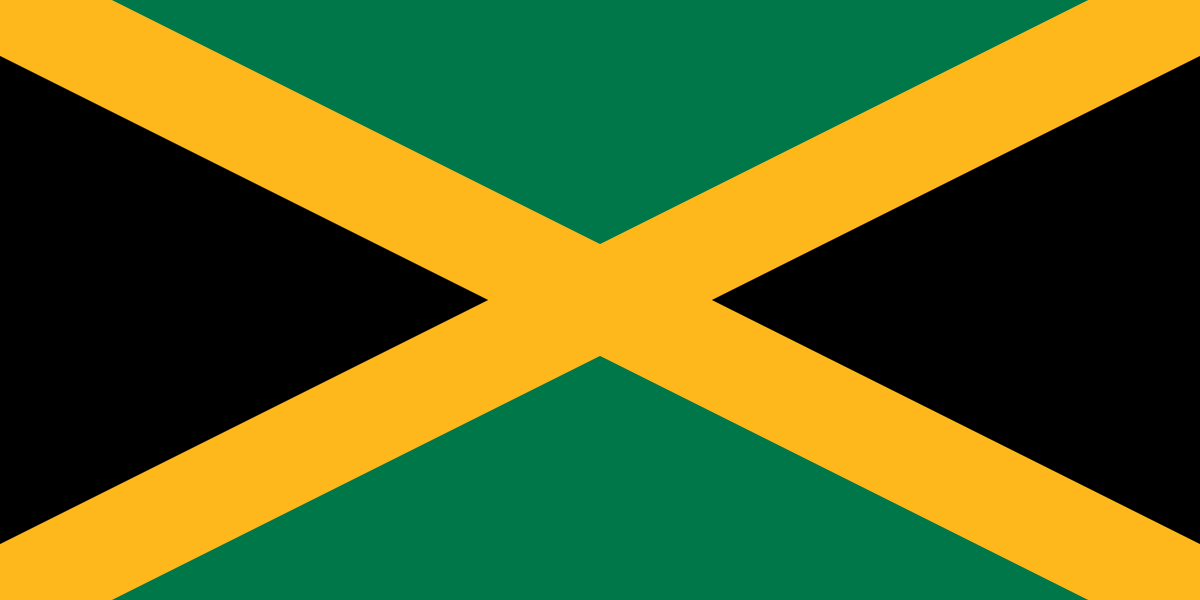
Jamaica
Jamaica
- Capital
- Kingston
- Population
- 2,961,161
- Region
- Americas
- Languages
- English
Despite being a tropical island, Jamaica has a long and storied history with winter sports, most famously represented by its national bobsleigh team which debuted at the 1988 Winter Olympics. The island is also the birthplace of Ian Fleming’s James Bond character, as the author wrote all fourteen of his novels at his Goldeneye estate in Oracabessa. Furthermore, Jamaica produces some of the world's most expensive and sought-after coffee beans in the Blue Mountains, where the unique misty climate creates a distinctively mild flavor profile.
Currency
The official currency is the Jamaican Dollar, identified by the ISO code JMD. Interestingly, before adopting its own dollar in 1969, the nation utilized a variety of currencies including Spanish doubloons, British pounds, and even a unique local 'anchor coinage' issued specifically for the West Indies.
Flag symbolism
The Jamaican flag is notable for being one of the few national flags in the world that does not contain the colors red, white, or blue. Adopted on Independence Day in 1962, the golden saltire represents the natural wealth of the country and the beauty of the sunlight. The black triangles symbolize the historical hardships faced by the people, while the green triangles represent the lush vegetation and agricultural potential of the island.
Emblem history
The Jamaican coat of arms features a male and female Taino Indian standing on either side of a shield, honoring the island's original inhabitants. The shield itself displays a red cross containing five golden pineapples, which were an indigenous fruit symbolizing hospitality and prosperity. Above the shield sits a Jamaican crocodile perched on a royal helmet, a motif that has remained largely consistent since the original version was granted by the British in 1661.