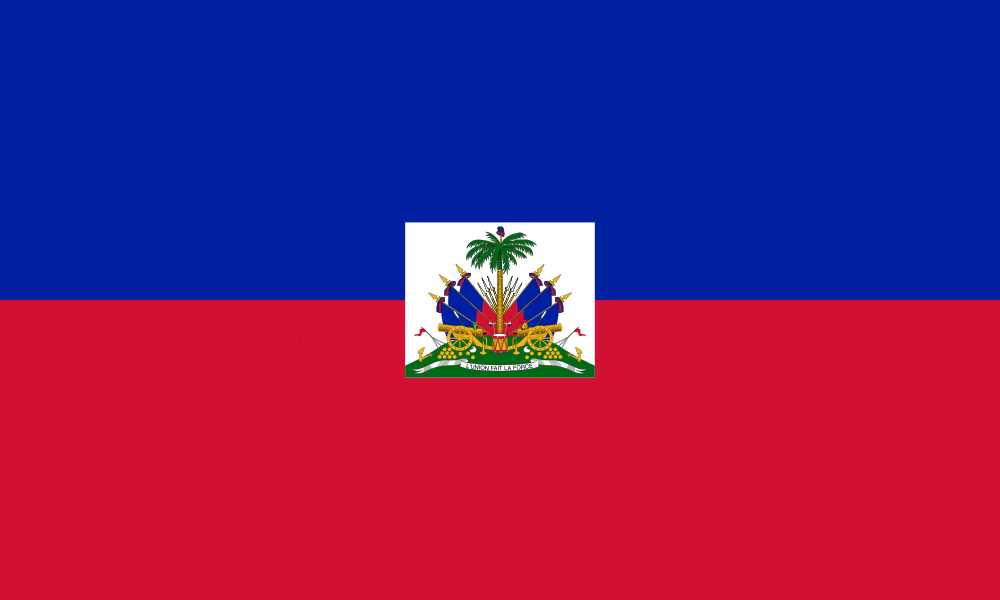
Haiti
Haiti
- Capital
- Port-au-Prince
- Population
- 11,402,533
- Region
- Americas
- Languages
- French, Haitian
Haiti made history in 1804 as the first nation in the world to be founded by formerly enslaved people who successfully overthrew their colonial rulers. This monumental victory against Napoleon’s forces established the first independent nation in Latin America and the Caribbean. Despite facing global isolation and crushing financial demands from France for decades, the country maintained its sovereignty through cultural resilience. Today, its revolutionary legacy is celebrated as a pivotal moment in the global movement for human rights and abolition.
Currency
The official currency of Haiti is the gourde, identified by the ISO code HTG. The name 'gourde' is derived from a Spanish term for 'fat' or 'heavy' coins, and during the early 1800s, legendary leader Henri Christophe reportedly used coffee beans as a temporary standard to back the currency's value.
Flag symbolism
The national flag features two horizontal bands of blue and red, which were inspired by the French Tricolour after the white stripe was symbolically removed to represent the rejection of colonial rule. The blue stripe honors the nation's Black citizens, while the red stripe represents the people of mixed heritage, symbolizing unity between the two groups. In the center, a white square contains the national coat of arms, a feature primarily used for official and state purposes. The phrase L'Union fait la force is inscribed on a ribbon at the bottom, translating to Strength through Unity.
Emblem history
The coat of arms depicts a trophy of weapons, including rifles with fixed bayonets and cannons, centered around a tall palmist tree topped with a Phrygian cap of liberty. These military elements serve as a stern reminder of the bloody struggle for independence and the citizens' readiness to defend their freedom. Flanking the central palm are several battle flags and a drum, which reflects the importance of communication and rhythm in revolutionary history. This emblem was first adopted in 1807 and has remained a constant symbol of resilience and national pride throughout Haiti's various governmental transitions.