Guatemala
Guatemala
- Capital
- Guatemala City
- Population
- 16,858,333
- Region
- Americas
- Languages
- Spanish
Guatemala is widely recognized as the birthplace of chocolate, as the ancient Maya popularized the consumption of cacao beans as a bitter beverage and even used them as currency. The country is also home to the deepest lake in Central America, Lake Atitlán, which is surrounded by three massive volcanoes and formed within a giant volcanic caldera. Additionally, the ruins of Tikal feature some of the tallest pre-Columbian structures in the Americas, serving as a testament to the sophisticated engineering of the Mayan civilization.
Currency
The official currency is the Guatemalan quetzal, denoted by the ISO code GTQ. It was introduced in 1924 during the presidency of José María Orellana and is named after the national bird because the ancient Maya used the bird's iridescent green tail feathers as a form of high-value currency.
Flag symbolism
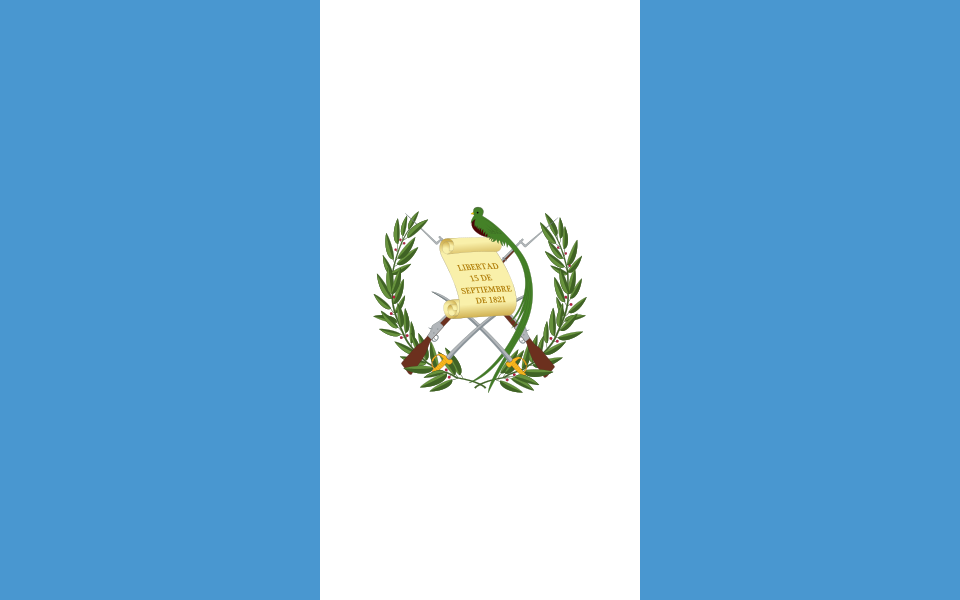
The flag features two vertical blue stripes on the outer edges and a white stripe in the center, representing the country's position between the Pacific and Atlantic Oceans. The sky blue color symbolizes purity, integrity, and the clear skies often seen over the nation, while the white stands for peace and the brightness of the people's ideals. Unlike many other Central American flags that use horizontal stripes, Guatemala’s vertical orientation was adopted in 1871 to distinguish it from its neighbors.
Emblem history
The central emblem features the resplendent quetzal, a bird that symbolizes liberty and immortality because it was historically believed it could not live in captivity. Two crossed Remington rifles indicate the nation's willingness to defend itself by force if necessary, while two crossed swords represent honor. A parchment scroll in the center displays the date of Central American independence from Spain, September 15, 1821, all framed by laurel branches signifying victory and peace.