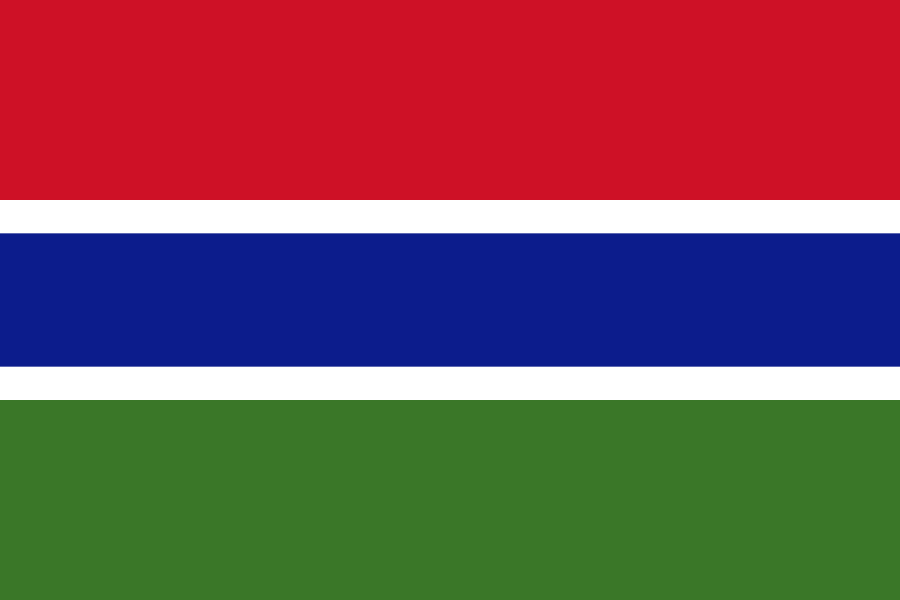
Gambia
Gambia
- Capital
- Banjul
- Population
- 2,416,664
- Region
- Africa
- Languages
- English
For over fifty years, the citizens of this nation have used a unique voting system involving marbles and metal drums rather than paper ballots. Each voter drops a glass marble into a bicycle-bell-equipped drum painted in their candidate's party colors, which rings loudly to signify a vote has been cast. This method was originally implemented to ensure high participation among voters who may have limited literacy skills. The system is so precise that observers listen for the sound of the bell to ensure no one tries to drop more than one marble at a time.
Currency
The national currency is the Gambian dalasi, denoted by the ISO code GMD. It was first introduced in 1971 to replace the Gambian pound at a rate of five dalasi for every one pound. Interestingly, the subdivision of the currency is called the butut, which derives its name from the Wolof word for 'small thing'.
Flag symbolism
The national flag features a horizontal tricolor of red, blue, and green, separated by two thin white fimbriations. The top red stripe represents the intense sun of the savannah, while the bottom green stripe symbolizes the agricultural fertility and lush forests of the land. Centered between them is a blue stripe representing the river that serves as the nation's lifeblood and namesake. The white stripes are not merely borders; they signify peace, unity, and the purity of the people's intentions.
Emblem history
Adopted just before independence in 1965, the coat of arms features two lions holding a central shield as supporters. Inside the shield, a crossed golden axe and hoe represent the primary tools used by the rural population for farming and construction. These tools signify the importance of labor and the agricultural foundation of the nation's economy. Above the shield sits a heraldic helmet topped with a local oil palm tree, a vital resource for traditional trade and industry.