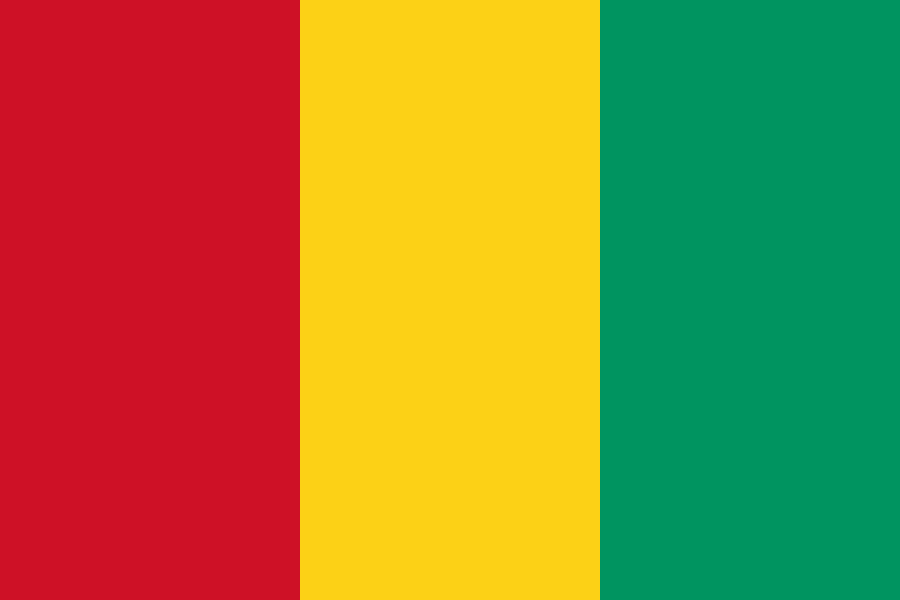
Guinea
Guinea
- Capital
- Conakry
- Population
- 13,132,792
- Region
- Africa
- Languages
- French, Fula
Guinea is often called the Water Tower of West Africa because it contains the headwaters of the region's most important rivers, including the Niger, Senegal, and Gambia. Over 20 major rivers originate in its highlands, making it hydrologically essential to the survival of millions of people in neighboring countries. Interestingly, despite this abundance of freshwater, the country has only recently begun to significantly tap into its massive hydroelectric potential to stabilize the domestic power grid.
Currency
The official currency is the Guinean franc, denoted by the ISO code GNF. It was first introduced in 1959 to replace the CFA franc as a step toward economic sovereignty, although it was briefly replaced by a currency called the syli between 1971 and 1985 before the franc was reinstated.
Flag symbolism
The flag consists of three vertical stripes of red, yellow, and green, modeled after the French Tricolour but utilizing the Pan-African colors. Red represents the blood shed by martyrs in the struggle for independence and the labor of the working classes. Yellow signifies the sun and the riches of the earth, while green symbolizes the lush vegetation and agricultural potential of the nation. Together, these colors reflect the national motto: Work, Justice, and Solidarity.
Emblem history
The national emblem of Guinea features a golden shield with a flying dove carrying an olive branch in its beak, signifying a commitment to peace. Below the shield, a ribbon displays the national motto, which has remained consistent through various political transitions. In previous versions, the emblem featured a crossed sword and rifle, but these were replaced in 1993 to emphasize a move toward civilian rule and diplomatic harmony. The current design also includes a red and green border around the shield, reinforcing the national identity found in the flag.