Falkland Islands (Malvinas)
Falkland Islands (Malvinas)
- Capital
- Stanley
- Population
- 2,563
- Region
- Americas
- Languages
- English
This archipelago is home to one of the world's most unique avian populations, where penguins significantly outnumber the human inhabitants. Five different species of penguins, including the Gentoo and King penguins, use the islands as vital breeding grounds each year. Interestingly, the local sheep outnumber people by a ratio of roughly 150 to one, defining much of the rural lifestyle. The islands also host the Striated Caracara, one of the rarest birds of prey on Earth, known locally for its bold and inquisitive nature.
Currency
The official currency is the Falkland Islands Pound (FKP), which is held at a fixed one-to-one parity with the British Pound Sterling. Interestingly, the islands issued their own banknotes as early as 1899, and while they circulate alongside British coins, the local notes are generally not legal tender in the United Kingdom itself.
Flag symbolism
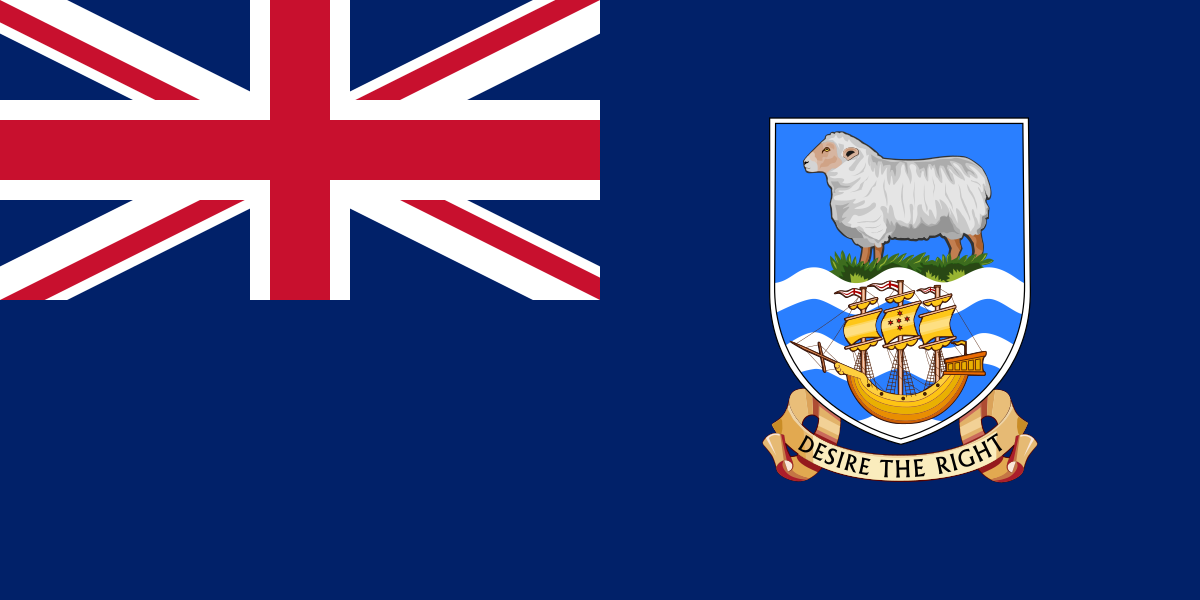
The flag is a British Blue Ensign featuring the Union Jack in the canton to signal its status as an overseas territory. On the fly side, it displays the local coat of arms, which includes a sailing ship representing the 'Desire,' the vessel that first sighted the islands in 1592. The blue background represents the maritime heritage and the vast South Atlantic waters surrounding the islands. A white ram stands atop a grassy mound, symbolizing the historical and economic importance of sheep farming to the community.
Emblem history
The coat of arms was officially granted in 1948 and incorporates elements that tell the story of the islands' exploration and industry. The ship depicted is a reminder of Captain John Davis's voyage, while the motto 'Desire the Right' serves as a pun on his ship's name and a statement of political resolve. Below the ship, stylized wavy blue and white lines represent the choppy seas that have both protected and isolated the territory. At the summit, the Tussock grass reflects the native flora that provides essential habitat for the local wildlife.