Fiji
Fiji
- Capital
- Suva
- Population
- 896,444
- Region
- Oceania
- Languages
- English, Fijian, Hindi, Urdu
Fiji is the only place in the world where the game of cibi, a traditional war dance, is performed by the national rugby team before every international match to intimidate opponents. Interestingly, despite being an island nation, Fiji has a significant history with viticulture and actually produces its own boutique wines from local vineyards on the main island. The country is also one of the few places where you can stand with one foot in the Eastern Hemisphere and one foot in the Western Hemisphere at the 180th meridian line on the island of Taveuni. This unique longitudinal position means a designated line physically marks where each new day begins globally.
Currency
The national currency is the Fijian Dollar (FJD), which was introduced in 1969 to replace the Fijian Pound at a rate of two dollars to one pound. Interestingly, Fiji released a limited edition seven-dollar banknote in 2017 to commemorate the national rugby sevens team winning the country's first-ever Olympic gold medal.
Flag symbolism
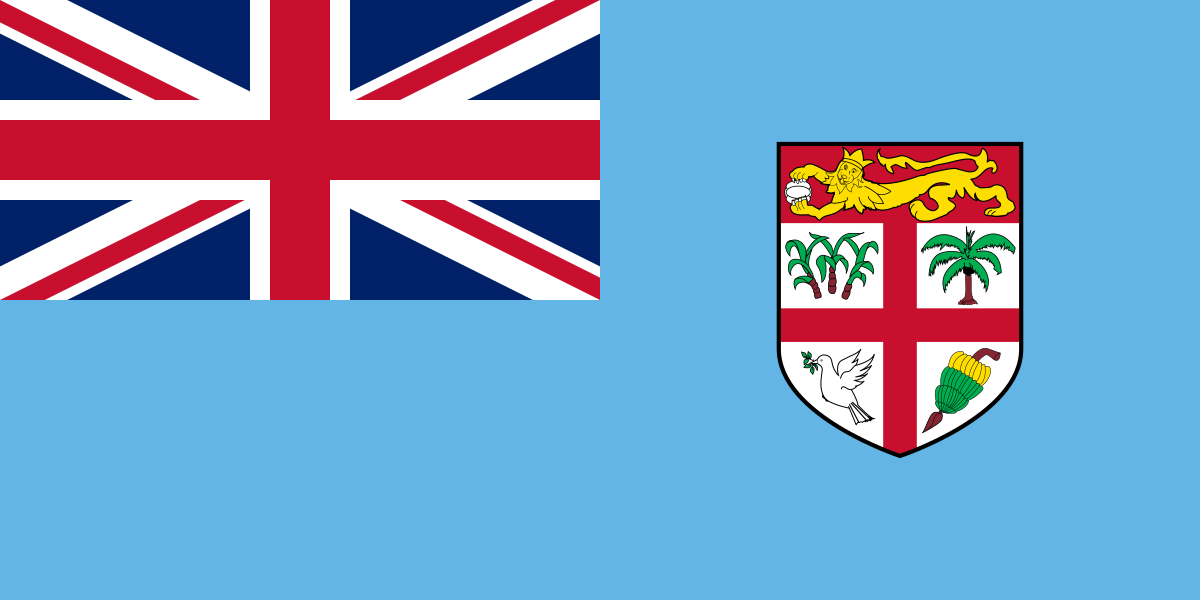
The light blue field of the flag represents the Pacific Ocean, which plays a central role in the lives of the islanders. The Union Jack remains in the canton as a symbol of the country's historical links to the United Kingdom as a former crown colony. On the fly side, the shield from the national coat of arms features a red cross of Saint George, which divides the shield into four quarters. These quarters contain symbols representing the local economy and traditional agriculture, specifically sugar cane, a coconut palm, a bunch of bananas, and the dove of peace.
Emblem history
The coat of arms, which occupies the shield on the flag, was officially granted by Royal Warrant in 1908. It features two Fijian warriors as supporters, one holding a spear and the other a latui club, dressed in traditional tapa cloth skirts. Above the shield rests a takia, a traditional outrigger canoe, symbolizing the maritime heritage and seafaring skills of the indigenous people. The motto at the base, 'Rerevaka na Kalou ka Doka na Tui,' translates to 'Fear God and honor the Queen,' reflecting the deep influence of Christian missions and the historic British monarchy on the nation's governance.