Eritrea
Eritrea
- Capital
- Asmara
- Population
- 5,352,000
- Region
- Africa
- Languages
- Tigrinya, Arabic, English
Eritrea is home to the ancient port city of Adulis, which once served as a major trading hub for the Aksumite Empire. During the late 19th and early 20th centuries, the capital city of Asmara was extensively developed by Italian architects into a masterpiece of Futurist and Art Deco design. This unique concentration of modernist architecture was preserved through decades of conflict and eventually led to the entire city being designated a UNESCO World Heritage site. Today, visitors can see perfectly preserved vintage espresso machines and cinemas that look like 1930s movie sets.
Currency
The official currency is the Eritrean nakfa, denoted by the ISO code ERN. It was introduced in 1997 to replace the Ethiopian birr at par, naming it after the town of Nakfa, which served as a crucial base and symbol of resilience during the country's long liberation movement.
Flag symbolism
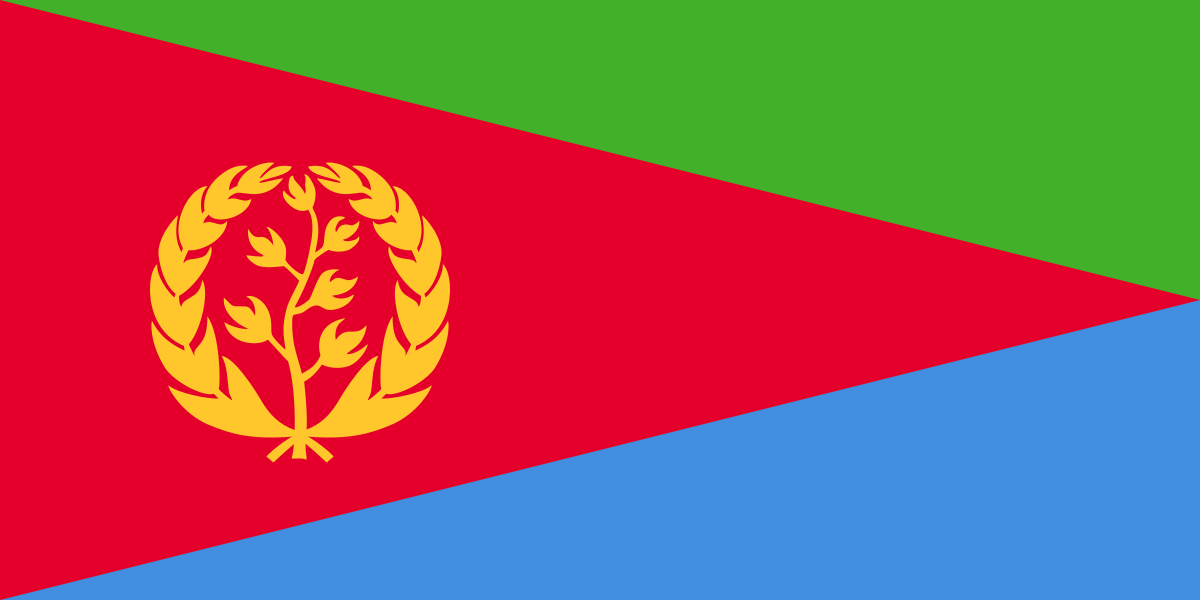
The flag features a large red triangle that symbolizes the blood shed during the long struggle for independence. The upper green triangle represents the country's agricultural abundance and natural fertility, while the lower blue triangle signifies the bounty of the sea. Centered on the red hoist side is a yellow wreath surrounding an upright olive branch, which is a tribute to the flag used when Eritrea was first federated with Ethiopia in 1952. The thirty leaves on the wreath are often said to represent the thirty years of conflict endured to achieve national sovereignty.
Emblem history
The national emblem of Eritrea was adopted upon its independence in 1993 and features a dromedary camel in its natural colors. This camel is a national icon representing the logistical backbone of the liberation movement, as these animals carried supplies and medicine through rugged terrain during the war. The camel is encircled by an olive wreath, which serves as a symbol of peace and links the modern state to its 1950s historical roots. At the base, a scroll displays the name of the state in Tigrinya, English, and Arabic, reflecting the nation's linguistic diversity.