Algeria
Algeria
- Capital
- Algiers
- Population
- 47,400,000
- Region
- Africa
- Languages
- Arabic
Algeria is home to the Tassili n'Ajjer National Park, a vast plateau that contains one of the most important groupings of prehistoric cave art in the world. Over 15,000 carvings and paintings document the dramatic climatic changes and animal migrations in the Sahara from 6,000 BC to the first centuries of the present era. The site reveals a time when the now-arid desert was a lush savanna teeming with buffalo, elephants, and hippopotamuses. It is often described as the world's largest open-air museum due to the density of these ancient archaeological records.
Currency
Dinar (DZD).
Flag symbolism
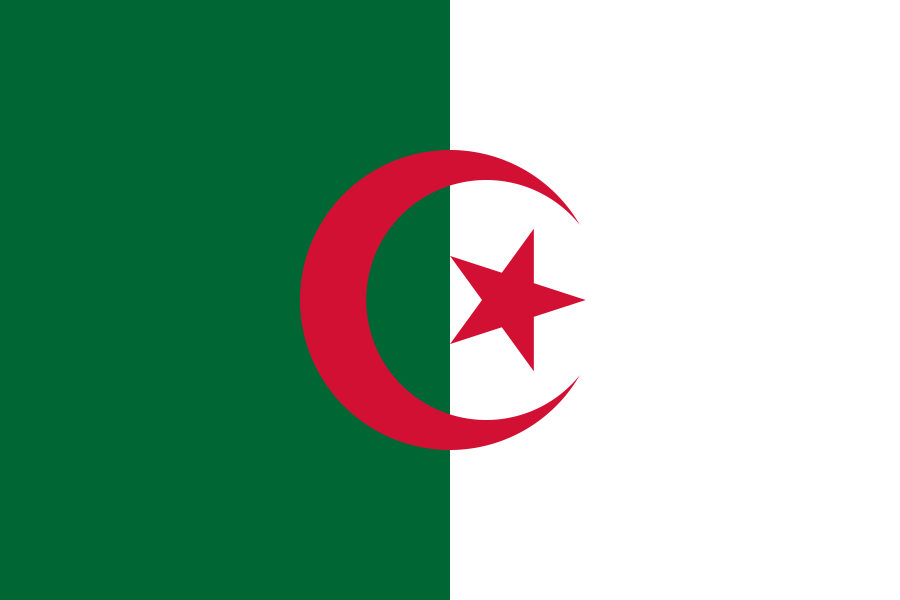
The national flag consists of two equal vertical bars of green and white, with a red star and crescent centered on the divide. The green represents the religion of Islam, while the white symbolizes purity and the peace achieved after the struggle for independence. The red color used for the star and crescent honors the blood of the martyrs shed during the war against colonial rule. The crescent and star are traditional Islamic symbols, but their specific arrangement in this design was influenced by the flags of the 19th-century resistance leader Emir Abdelkader.
Emblem history
The current national emblem, adopted in 1976, features the Hand of Fatima, a traditional symbol of protection and strength, positioned under a rising sun that represents a new era. Behind these symbols are various icons of national development, including industrial plants and agricultural plants like wheat and olive branches. The emblem also incorporates the Atlas Mountains and local architectural motifs to ground the design in the country's physical landscape. Surrounding the central imagery is the official name of the state written in Arabic, encircling the elements to represent national unity.