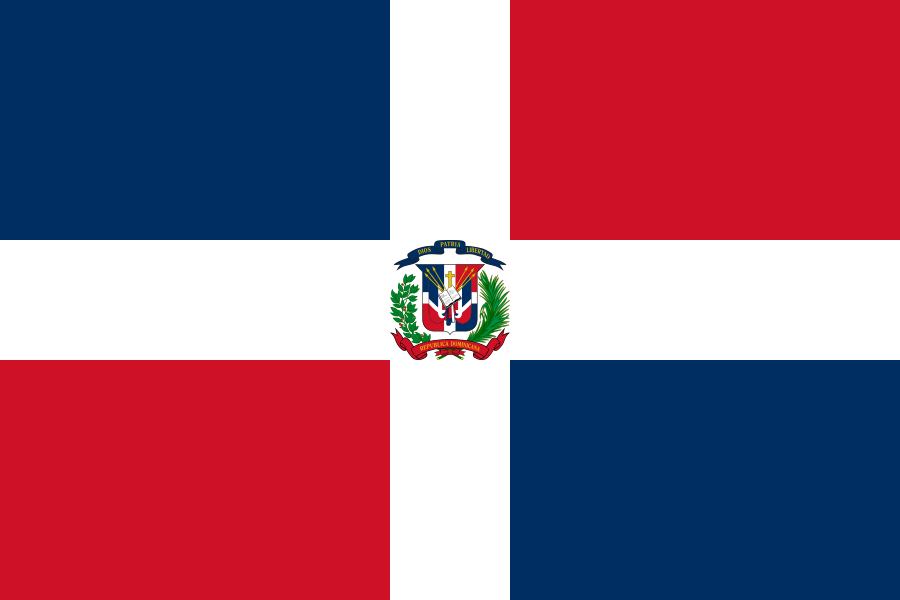
Dominican Republic
Dominican Republic
- Capital
- Santo Domingo
- Population
- 10,847,904
- Region
- Americas
- Languages
- Spanish
The Dominican Republic is home to the oldest permanent European settlement in the Americas, boasting the first cathedral, monastery, university, and hospital built in the New World. Known as the Colonial Zone in Santo Domingo, this historic center remains a vibrant neighborhood and a UNESCO World Heritage Site. Remarkably, it is also the only country in the world that features a Bible on its national flag. This religious element reflects the deep historical and cultural influence of Christianity on the nation's identity منذ the 19th century.
Currency
The official currency is the Dominican Peso, identified by the ISO code DOP. While it has been the primary unit of exchange since the country's first independence in 1844, it was briefly replaced by the US Dollar in the early 20th century during a period of American administration. Today, the banknotes feature prominent national figures and landmarks, celebrating the island's diverse cultural heritage.
Flag symbolism
The flag features a centered white cross that divides the field into four alternating rectangles of blue and red. The white cross symbolizes salvation and the peace sought by the nation, while the blue sections represent liberty and the sky above. The red rectangles signify the blood shed by heroes during the struggle for independence from foreign rule. In the center of the cross sits the national coat of arms, making it one of the few flags globally to include a specific religious text.
Emblem history
The coat of arms is centered on the flag and features a shield supported by an olive branch and a palm leaf, representing peace and immortality. At the center of the shield is an open Bible topped by a small golden cross, famously opened to the Gospel of John, chapter 8, verse 32. Above the shield, a blue ribbon displays the national motto 'Dios, Patria, Libertad,' which translates to 'God, Fatherland, Liberty.' This emblem was officially adopted in 1844, though it underwent several minor stylistic refinements before the current version was standardized in 1913.